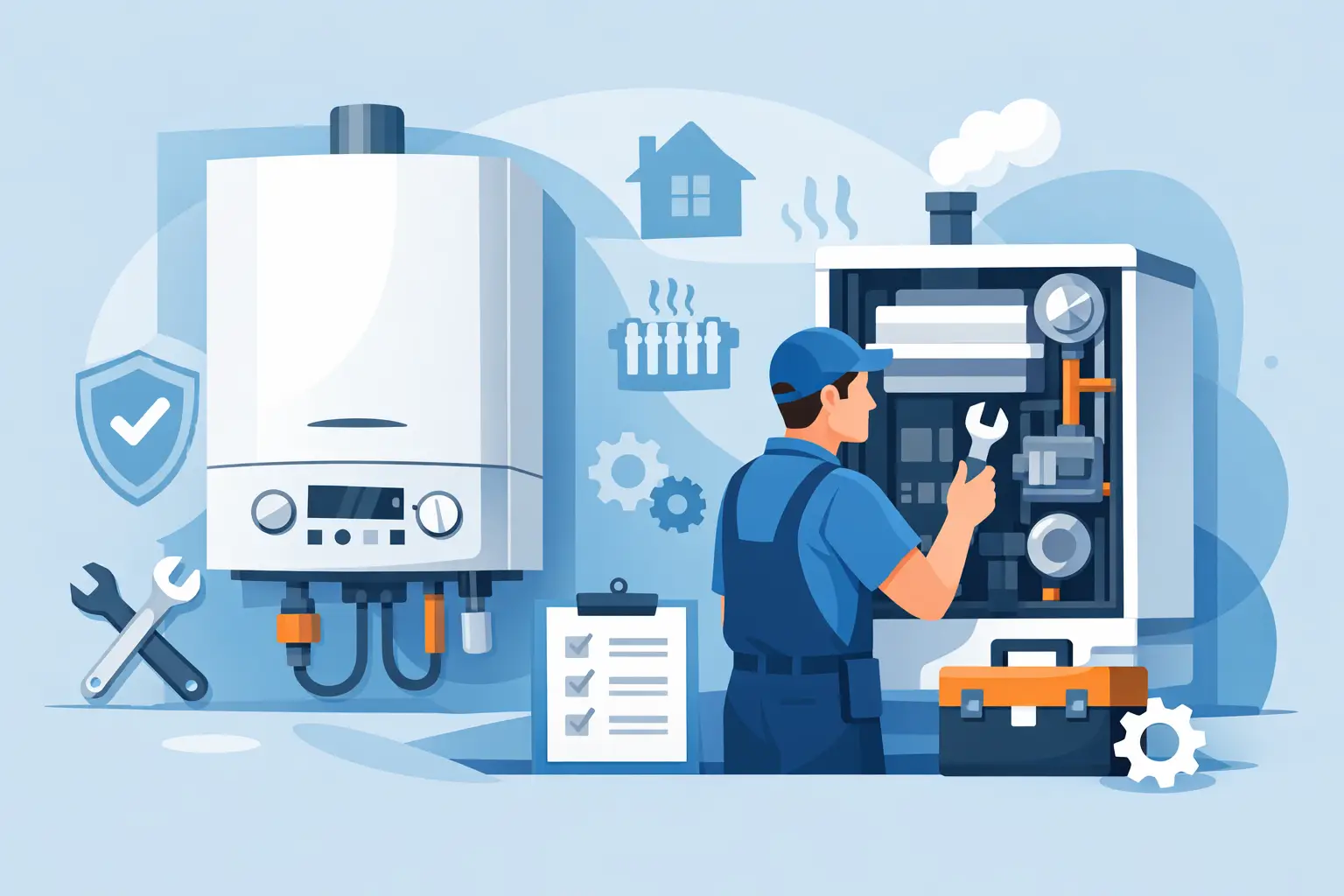
When your boiler stops working in the middle of a cold week, the cheapest policy on paper rarely feels like the best choice. The best boiler service and repair cover is the one that gets an experienced engineer to your door quickly, keeps costs predictable, and does not leave you arguing over exclusions when you need heat and hot water most.
For homeowners, landlords and small commercial property operators, boiler cover can be useful – but only if you choose it carefully. Some plans offer genuine peace of mind. Others look competitive until you read the small print and realise annual servicing is extra, parts are capped, or older boilers are barely covered at all. That is where a clear comparison matters.
What the best boiler service and repair cover should actually include
A good policy should do more than tick a marketing box. At minimum, it should include an annual boiler service, call-outs for breakdowns, labour, and replacement parts for covered faults. If servicing and repairs are split into separate add-ons, the price can climb quickly.
Response time matters just as much as price. If your heating fails in January, waiting several days for attendance is not much comfort. The best providers set clear expectations around emergency response and appointment windows, rather than vague promises.
It is also worth checking whether cover applies only to the boiler itself or to the wider heating system. Some policies cover controls, pumps and radiators, while others stop at the appliance casing. That difference matters because many heating faults sit outside the boiler but still leave you without reliable heating.
Best boiler service and repair cover for different needs
There is no single policy that suits every property. What works for a newer combi boiler in a family home may not be right for an ageing regular boiler in a rental property.
For homeowners who want predictable costs
If your main concern is avoiding surprise repair bills, look for cover that includes parts and labour without a low annual claims cap. Fixed monthly pricing can help with budgeting, especially if your boiler is central to a busy household and any downtime is disruptive.
That said, higher monthly premiums are not always better value. If your boiler is still under manufacturer guarantee, paying separately for annual servicing may make more sense than buying full repair cover straight away. It depends on the age of the appliance, its service history, and how much risk you are comfortable carrying yourself.
For landlords who need dependable compliance support
Landlords usually need more than just breakdown help. They need reliable servicing, proper paperwork, and a contractor who turns up when tenants are left without heating or hot water. Boiler cover can help, but it should fit around your wider legal and maintenance responsibilities.
In practice, many landlords benefit more from a trusted local engineering company than a remote call-centre-led policy. Fast attendance, clear reports and straightforward pricing often matter more than headline cover terms.
For older boilers
This is where many policies become less generous. Older boilers are more likely to face exclusions, capped repair costs or outright refusal after inspection. Some providers will accept the policy, collect monthly payments, and then identify pre-existing issues when you try to claim.
If your boiler is ageing, ask direct questions before signing up. Is there an upper age limit? Is an initial inspection required? Are parts available for your model? If parts are obsolete, even the best-looking policy may not help for long.
What boiler cover often excludes
This is the part most people only discover after a fault. Common exclusions include sludge-related issues, scale damage, poor water pressure, frozen condensate pipes, cosmetic damage, and faults linked to lack of servicing.
Some policies also exclude system components unless you buy a higher tier. That means your boiler may be covered, but the programmer, motorised valve or circulating pump may not be. From your point of view, the heating still does not work – but from the provider’s point of view, it is a different category of fault.
There can also be limits on claims value, call-out numbers, and access-related costs. If a repair requires lifting flooring or removing boxing-in to reach pipework, you may be responsible for making good afterwards. Good cover is not just about what is included. It is about how many practical gaps are left for you to deal with.
Service plan or pay-as-you-go repair?
For some properties, boiler cover is the right choice. For others, annual servicing plus pay-as-you-go repairs works better.
If your boiler is modern, well maintained and still fairly efficient, paying for an annual service and dealing with repairs as they arise can be cost-effective over time. You avoid monthly fees and retain flexibility over who carries out the work.
If your boiler is older, heavily used, or installed in a property where breakdowns create major stress, cover may be the safer option. The appeal is not just the money. It is the reduced hassle. One phone call, one provider, and a clearer route to getting heat restored quickly.
There is a trade-off, though. Ongoing cover can become expensive over several years, particularly if your appliance is nearing replacement age. At a certain point, repeated repairs and monthly cover costs can start looking less sensible than investing in a new boiler with a long guarantee.
How to compare providers properly
Price should never be your first filter. Start with what is covered, how claims are handled, and who actually carries out the work.
Some national plans subcontract repair work widely, so service quality can vary by area. A policy may look strong on paper but still feel frustrating if engineer availability is limited locally. A trusted local company with accredited engineers, transparent pricing and reliable communication can often provide more confidence than a cheaper, more generic package.
Check whether engineers are Gas Safe registered, whether annual servicing is included in the monthly cost, and whether replacement parts are covered in full. Also look at reputation. Reviews often reveal the practical truth – whether appointments are kept, whether faults are explained clearly, and whether customers feel looked after when something goes wrong.
When cover is not the best answer
Sometimes the real issue is not whether to buy cover, but whether your boiler is already at the end of the road. If breakdowns are becoming frequent, parts are harder to source, and energy bills are climbing, cover can become a short-term sticking plaster rather than a sensible long-term fix.
In those cases, it may be better to put money towards replacement instead of ongoing repair costs. A new boiler installed properly, with a strong manufacturer guarantee and regular servicing, can offer far better reliability than paying month after month to keep an unreliable unit going.
This is particularly relevant for homeowners planning to stay in the property for several years and landlords who want fewer maintenance headaches. Cover has value, but only when it supports a system that is still worth maintaining.
A practical way to decide
If you are comparing the best boiler service and repair cover, ask yourself three simple questions. First, how old is the boiler and how reliable has it been? Second, if it failed tomorrow, would the repair cost be manageable without cover? Third, do you trust the provider to respond quickly and deal with the problem properly?
If the boiler is relatively modern and your finances can absorb an occasional repair, annual servicing alone may be enough. If the boiler is essential to a busy home, a rental property, or a small business premises where disruption quickly becomes costly, stronger cover is easier to justify.
And if you are already facing repeated faults, be honest about whether repair cover is helping you manage risk or simply delaying replacement. A dependable local specialist such as Walsh Plumbing & Heating can help you assess that properly, without making the decision feel more complicated than it needs to be.
The right choice is the one that keeps your property safe, warm and manageable – not just this winter, but over the next few years as well.