A boiler rarely picks a convenient time to fail. More often, it happens on a cold morning, during a family routine, or just as you realise repair costs are starting to stack up. If you are weighing up your options, understanding how boiler replacement works can make the decision feel far more manageable.
For most homeowners and landlords, the process is simpler than they expect when it is handled properly. A good installer will guide you from the first survey through to handover, explain your options in plain English, and make sure the new system is safe, efficient and set up for long-term reliability. You should know what you are paying for, what is being fitted, and what happens on the day.
How boiler replacement works from start to finish
Boiler replacement usually begins with a survey or quotation process. This is where an engineer looks at your current heating system, your property layout, your hot water demand and the condition of the existing pipework, flue and controls. The aim is not just to swap one box for another. It is to make sure the new boiler is correctly matched to the property and installed to current standards.
This stage matters because the right boiler for a one-bedroom flat is not necessarily the right choice for a larger family home with multiple bathrooms. A landlord replacing a failing boiler in a rental may also have different priorities from a homeowner planning to stay in the property for years. Sometimes the best option is a straightforward like-for-like replacement. In other cases, a system upgrade makes more sense, especially if the old setup is inefficient or unreliable.
Once the survey is complete, you should receive a clear quote covering labour, materials, removal of the old boiler, commissioning and any agreed extras. Transparent pricing is important here. If costs are vague at the start, they often become a problem later.
Choosing the right boiler
Before any installation starts, the new boiler needs to be specified properly. In UK homes, this usually means choosing between a combi, system or regular boiler, depending on the property and existing setup.
A combi boiler can work well in smaller homes with modest hot water demand because it heats water on demand and does not need a separate hot water cylinder. A system boiler is often better for homes with higher hot water use, while a regular boiler may still be the right fit in properties with traditional heating layouts.
This is also the point where efficiency, warranty length, controls and budget come into the conversation. A cheaper boiler upfront is not always the better value if it comes with a shorter guarantee or does not suit the way the property is used. Equally, the highest-spec model is not automatically necessary. Good advice should be based on what you need, not on what sounds impressive.
What happens on boiler installation day
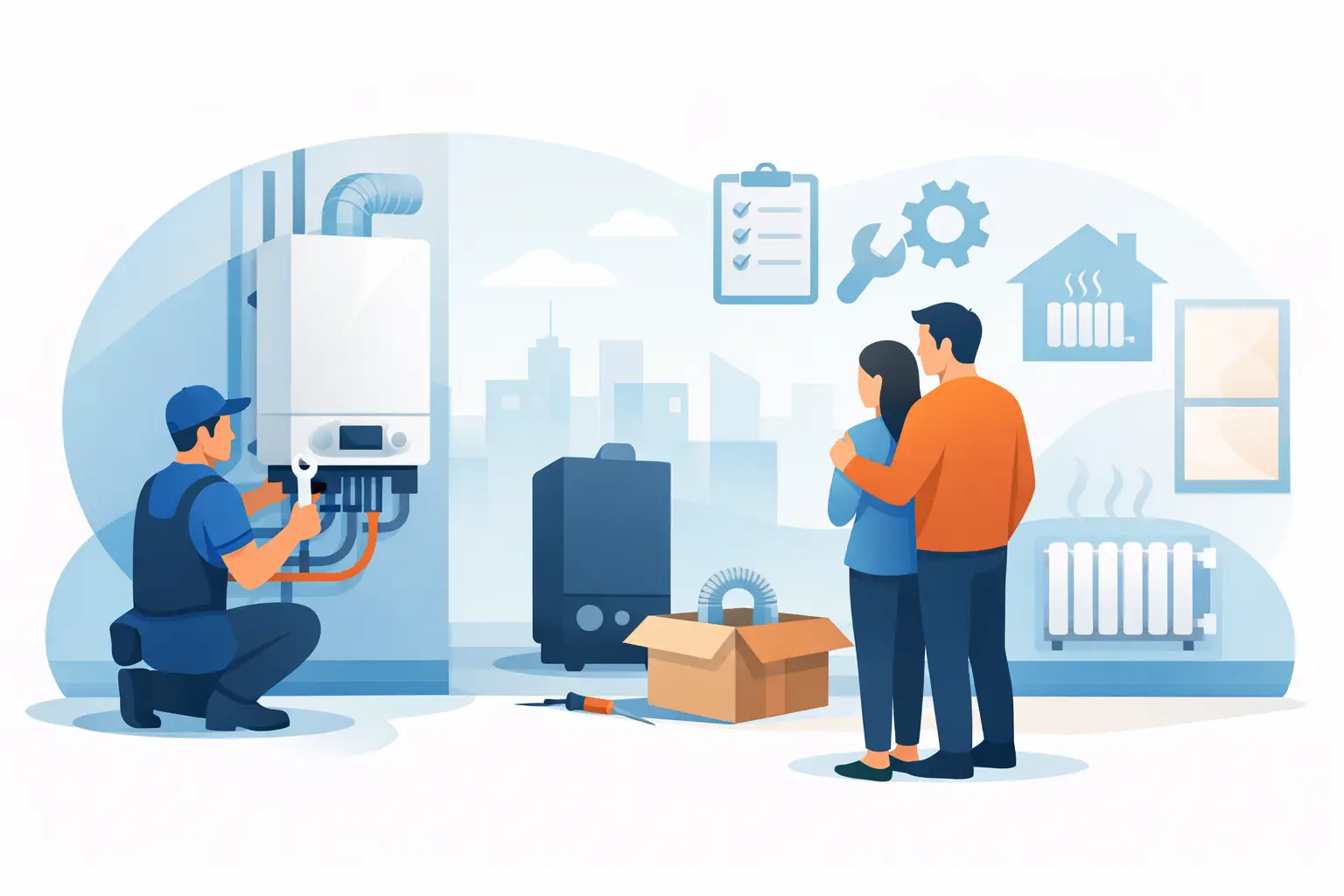
When people ask how boiler replacement works, what they usually want to know is what will actually happen in their home. In most cases, the engineer will start by protecting the work area and isolating the existing boiler and relevant services. The old unit is then drained down, disconnected and removed.
If the new boiler is going in the same place and the heating system is in reasonable condition, the job is generally quicker and more straightforward. If the boiler is being relocated, or if the flue route, gas pipe sizing or condensate pipe needs alteration, the work becomes more involved. That does not mean it is a problem. It simply means more labour and a little more planning.
During installation, the engineer will fit the new boiler, connect it to the heating and hot water circuits, complete the gas and flue work, and install or upgrade heating controls where needed. In many replacements, the system is also cleaned or flushed to remove sludge and debris that could affect performance. A magnetic filter may be added as well, helping to protect the new boiler over time.
A proper installation is about more than getting the heating back on. It is about making sure every part of the system supports the boiler, rather than causing future faults.
Testing, commissioning and sign-off
Once the physical installation is complete, the boiler is not simply switched on and left. It needs to be tested, commissioned and adjusted correctly. This includes checking gas pressures, confirming safe combustion, inspecting the flue, testing controls and making sure the system heats up and responds as it should.
The engineer should also register the appliance, complete the benchmark paperwork and explain the controls to you clearly. That part is often overlooked, but it makes a real difference. A modern boiler with good controls can help reduce waste and improve comfort, but only if you know how to use it.
At the end of the job, the old boiler and waste materials should be removed, and the work area left tidy. For most customers, that clean finish matters just as much as the technical side.
How long does boiler replacement take?
A standard like-for-like boiler replacement can often be completed in a day. More complex installations may take longer, especially if the boiler is being moved, the system needs major upgrades, or there are issues with existing pipework.
The honest answer is that it depends on the property and the condition of the current system. A reliable installer should tell you upfront what timescale to expect, rather than making promises that only create frustration later.
For customers dealing with a total breakdown, speed matters. That is why fast surveys, fixed quotes and prompt scheduling are so valuable. When heating and hot water are off, you want a clear plan, not a drawn-out process.
What can affect the cost?
The cost of replacing a boiler is shaped by more than the appliance itself. Boiler type, output, brand, warranty level and controls all play a part. So do installation conditions such as access, flue position, gas pipe upgrades and whether the heating system needs cleaning or alteration.
There is also a difference between the cheapest quote and the best-value quote. If a price excludes important system protection, registration, proper controls or aftercare, it may not be saving you money in the long run. A fixed quote with no hidden extras gives you a much clearer basis for comparison.
Finance can also make a replacement more manageable, particularly when the boiler has failed unexpectedly. For many households, the ability to spread the cost takes some of the pressure out of an urgent decision.
Common concerns homeowners have
One of the biggest worries is disruption. In reality, a professionally managed boiler replacement should be organised, tidy and far less stressful than many people expect. You may be without heating or hot water during the works, but a good team will keep that period as short as possible and keep you updated throughout.
Another concern is whether the replacement is really necessary. Sometimes a repair is still the sensible option, especially on a newer boiler with an isolated fault. But if the boiler is old, unreliable, inefficient or increasingly expensive to keep alive, replacement often becomes the better financial decision. Repeated call-outs can quickly cost more than people realise.
There is also the question of future-proofing. Some customers are already thinking about lower-carbon heating and whether a new gas boiler still makes sense. That depends on the property, the budget and the current heating setup. For many homes, a modern efficient gas boiler remains a practical option right now, particularly when combined with better controls and proper system design.
Why the installer matters as much as the boiler
Even an excellent boiler can underperform if it is badly fitted. That is why the quality of the installer matters so much. You want a Gas Safe registered engineer, clear communication, proper product knowledge and confidence that the job will be completed to a high standard.
Credentials, manufacturer accreditation and strong customer reviews are all useful signs. So is the way the company handles the early stages. If the survey is rushed, the quote is unclear or your questions are brushed aside, that usually tells you something about how the installation itself will go.
For customers in Hertfordshire and surrounding areas, working with a company such as Walsh Plumbing & Heating means the process is built around clarity and reassurance. You pay what you are quoted. You know what is being installed. And you have the backing of guarantees and professional aftercare once the job is done.
Boiler replacement is not something most people look forward to, but it does not need to be complicated. With the right advice and the right installer, it becomes a straightforward upgrade that restores heating, improves efficiency and gives you one less thing to worry about when the weather turns cold.