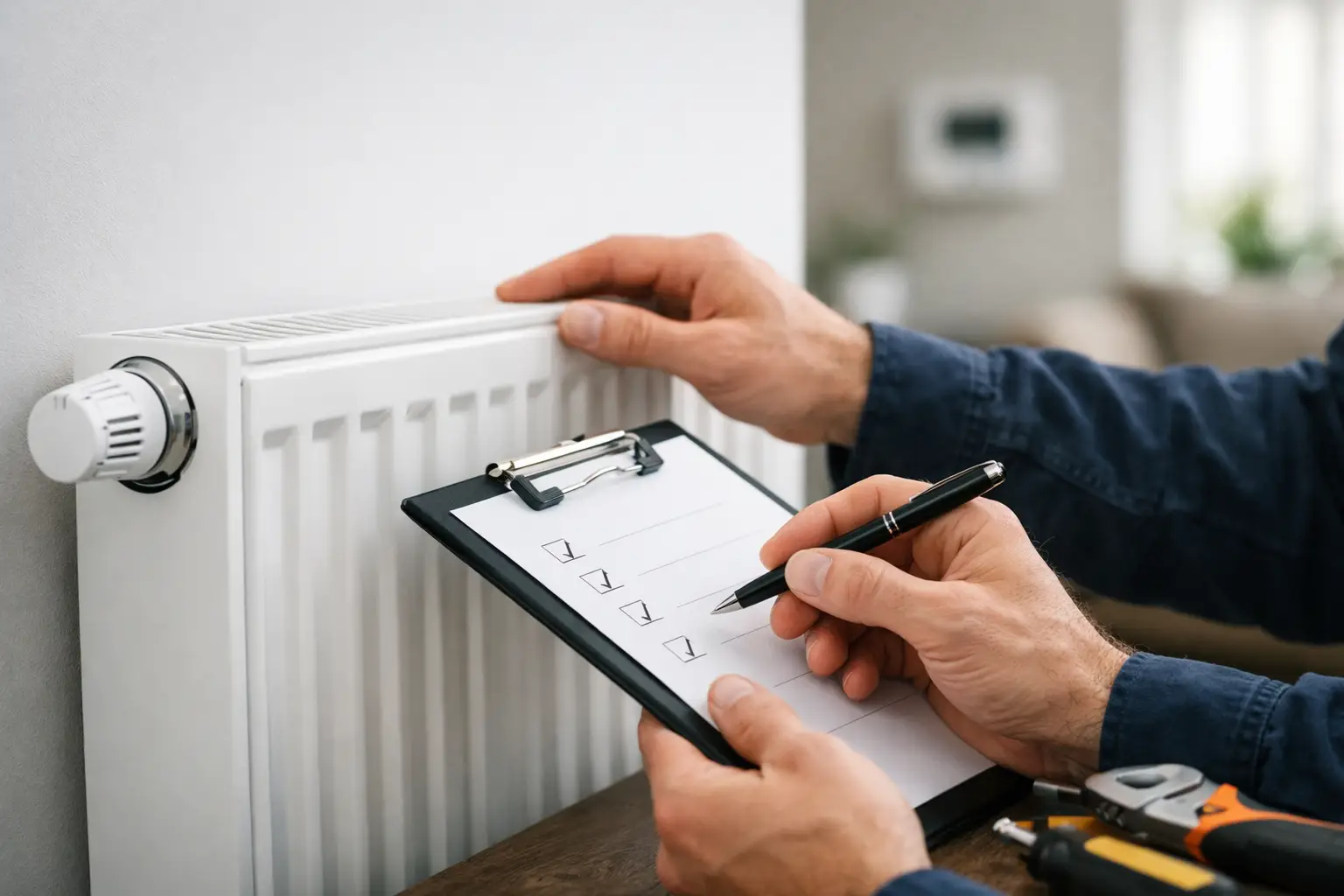
A cold radiator on a busy morning is frustrating. A boiler that will not fire, keeps losing pressure or makes unfamiliar noises can feel far more worrying. This central heating problems checklist helps you rule out simple causes safely, recognise signs that need professional attention and avoid making a small fault worse.
Start with safety, not the boiler controls
If you can smell gas, suspect a gas leak or hear an unusual hissing sound near a gas appliance, do not investigate it yourself. Extinguish naked flames, avoid using electrical switches, open doors and windows if it is safe to do so, leave the property and call the National Gas Emergency Service on 0800 111 999.
A carbon monoxide alarm sounding is also an emergency. Move everyone into fresh air, call 999 if anyone feels unwell, then seek advice from a Gas Safe registered engineer. Headaches, dizziness, nausea and confusion can be signs of carbon monoxide exposure, although the gas itself cannot be seen or smelled.
For all other issues, do not remove the boiler casing or attempt to work on gas, electrical components or sealed internal parts. A few basic checks are sensible. Repairs and servicing belong with a qualified engineer.
Central heating problems checklist: safe checks first
Work through these checks in order. They can often identify whether the problem is a setting, a system-wide fault or an issue with one radiator.
- Check the thermostat and programmer. Set the room thermostat a few degrees above the current room temperature and make sure heating is scheduled to be on. Check that batteries in a wireless thermostat have not run flat. If the display is blank, changing batteries may solve the issue, but re-pairing may be needed on some models.
- Look at the boiler pressure gauge. Most sealed central heating systems operate at around 1 to 1.5 bar when cold, but the correct range is shown in your boiler manual. Pressure below the marked range can stop a boiler from operating. Pressure that repeatedly rises too high or falls again after topping up points to a fault, such as a leak or expansion vessel problem, and needs an engineer.
- Check the boiler display for an error code. Write the code down exactly as shown, along with the boiler make and model. A reset may be appropriate only where your boiler instructions say it is. Repeated resets are not a repair and can delay diagnosis.
- Confirm there is power. Check the boiler’s fused spur is switched on and see whether a tripped circuit breaker has affected it. If it trips again, leave it off and call an electrician or heating engineer as appropriate. Do not replace fuses with a higher rating.
- Compare your hot water and heating. If hot water works but radiators do not, the problem may involve controls, a motorised valve or circulation. If neither works, the boiler, its pressure, power supply or fuel supply may be involved. This distinction is useful information when booking a repair.
- Inspect the condensate pipe in cold weather. Modern condensing boilers produce water that drains through a condensate pipe. Where an external section freezes, the boiler may lock out. Check for visible ice only if it is safe to do so. Never use a flame or boiling water on the pipe. If you are unsure, arrange for an engineer to attend.
What common symptoms can tell you
The boiler is on, but radiators stay cold
Start by checking whether every radiator is cold or only one or two. If all are cold, the issue is more likely to be the thermostat, programmer, boiler pressure, pump or a system control. If one radiator is cold while others are warm, check that both valves are open. The thermostatic radiator valve can occasionally stick after a long period of being turned down, but forcing or dismantling it can cause a leak.
A radiator that is cold at the top but warmer at the bottom may contain trapped air. Bleeding can help in some systems, but it will lower system pressure and is not always the right answer. If several radiators need regular bleeding, there may be an underlying leak, corrosion issue or poor system balance. That is worth investigating rather than treating repeatedly.
Radiators are warm at the top and cold at the bottom
This often suggests sludge or debris restricting water flow. Older systems are especially susceptible, but it can happen in any system without effective water treatment. Turning the boiler temperature higher will not remove the cause. An engineer can assess whether a chemical clean, powerflush, filter service or targeted repair is appropriate. The right option depends on the system’s age, condition and the extent of the build-up.
Your boiler keeps losing pressure
A one-off pressure drop can occur after bleeding radiators. Regular pressure loss is different. Look for obvious signs of water beneath radiators, around visible pipework and at towel rail valves, but do not assume there is no leak simply because nothing is visible. Leaks can be hidden under floors or within walls.
Constantly repressurising the system is not a long-term fix. It introduces fresh water, which can add oxygen and contribute to corrosion. An engineer should identify why the pressure is falling before the issue damages other boiler components.
The boiler is noisy or switches itself off
Banging, whistling, gurgling or kettling noises can have several causes, including air in the system, restricted water flow, limescale, low pressure or a failing pump. Some boiler sounds are normal during operation, so the key change is whether the noise is new, louder or accompanied by poor heating performance.
A boiler that fires briefly and then stops may be protecting itself from a fault. Note the error code, the time it happens and whether hot water or heating triggers it. These details can make diagnosis quicker and reduce unnecessary disruption.
You have hot water but no central heating
This is a common call-out where a combi boiler still supplies hot water. The fault may sit with the heating controls, thermostat, zone valve or diverter valve. Check the heating schedule and thermostat first, but do not keep resetting the boiler if those controls appear correct. A qualified engineer can test the relevant components safely.
When to book a repair without delay
Some problems should not wait for the next annual service. Arrange professional help promptly if your boiler is leaking, repeatedly locking out, losing pressure, showing persistent fault codes or making loud new noises. You should also book a visit if rooms will not reach a safe temperature, particularly where young children, older residents or vulnerable people are at home.
Landlords have a separate responsibility to keep gas appliances safe and provide tenants with a current Gas Safety Record. A tenant reporting a heating fault should be taken seriously, even if the boiler appears to work intermittently. Intermittent faults rarely improve on their own.
When you call, have the boiler make, model, age if known, fault code and a short description of what you have already checked. This gives the engineer a clearer starting point and helps avoid repeat visits.
Reduce the chance of another breakdown
An annual boiler service is the most practical starting point. It gives an engineer the chance to check safe operation, inspect key components and spot deterioration before it becomes a no-heating emergency. It also helps protect manufacturer warranty terms where annual servicing is required.
Keep the area around your boiler accessible and avoid boxing it in without appropriate clearances. Test carbon monoxide alarms regularly, protect external condensate pipework before prolonged freezing weather and pay attention to changes in radiator performance. Slow warm-up times, cold patches and frequent pressure adjustments are early warnings worth acting on.
If your boiler is older, unreliable or expensive to repair, replacement may offer better value than repeated call-outs. That decision depends on repair cost, efficiency, the condition of the wider system and how long you plan to stay in the property. A clear survey and fixed quote make the comparison easier.
For homeowners, landlords and small businesses across Hertfordshire, Walsh Plumbing & Heating can assess faults, explain the options in plain English and carry out repairs with Gas Safe registered expertise. The best time to act is when your heating first becomes unreliable, not when a cold spell turns a manageable repair into an urgent problem.