A kettle that furs up quickly is more than a nuisance – it is a useful warning about what may be happening inside your hot-water system. Choosing the best boiler for hard water areas is not simply about selecting the highest-efficiency model or the longest guarantee. It is about matching the boiler, hot-water setup and water treatment to your property, then having it installed and commissioned properly.
For households across Hertfordshire and North London, hard water is a familiar fact of life. The good news is that it does not rule out a modern gas boiler. With the right specification and protection in place, you can enjoy dependable heating and hot water without accepting avoidable limescale-related call-outs.
What hard water does to a boiler system
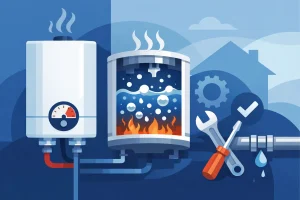
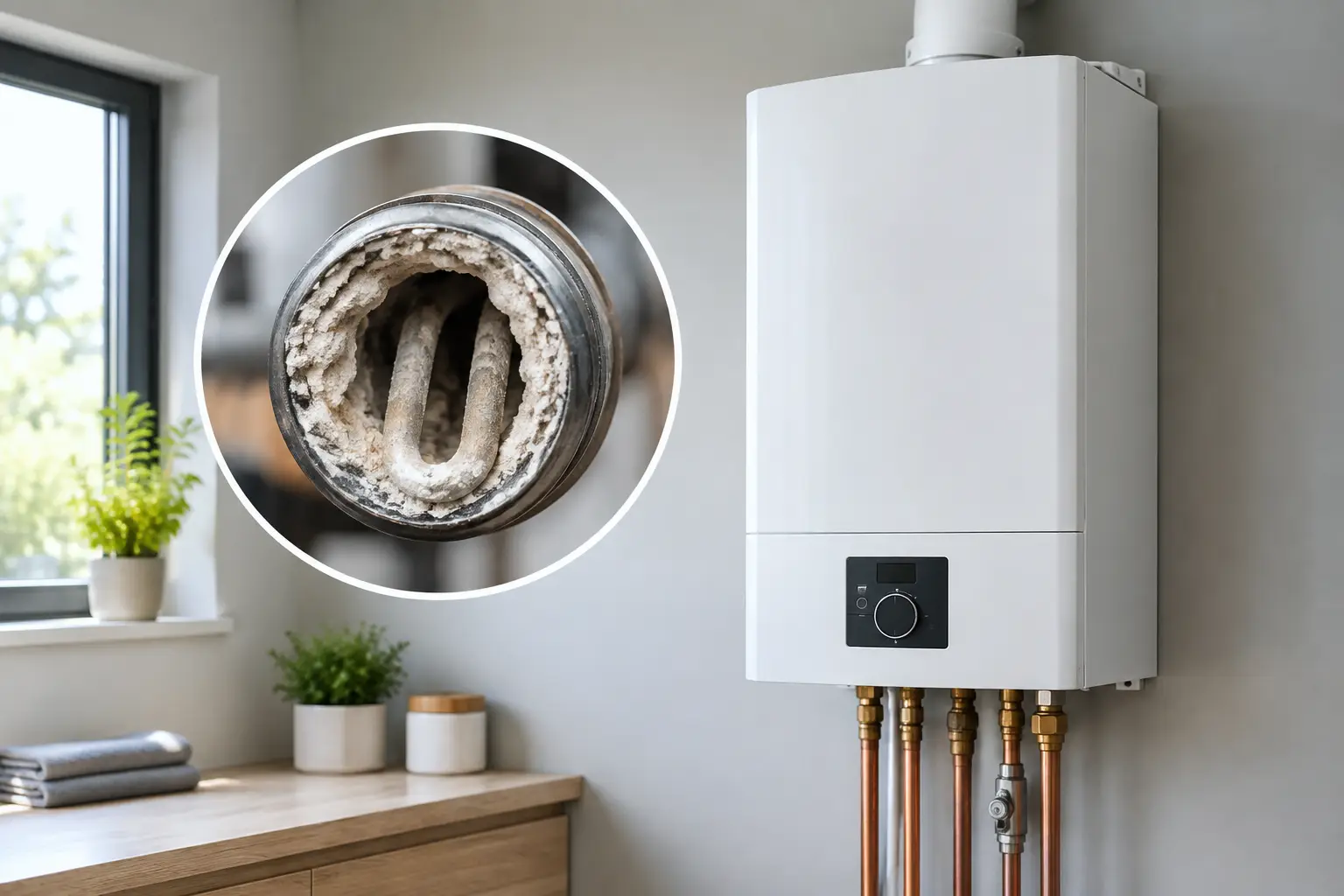
Hard water contains dissolved minerals, mainly calcium and magnesium. When water is heated, some of those minerals can come out of solution and form limescale. You may see it first on taps, shower screens and inside the kettle, but it can also affect components that heat domestic hot water.
In a combi boiler, the plate heat exchanger is often the component most exposed to this issue. It transfers heat from the boiler water to the mains water used at your taps and shower. If scale builds up within its narrow waterways, hot-water flow can reduce, temperatures can become inconsistent and the boiler may work harder than it should.
Hard water does not usually mean the entire heating circuit is continually filling with scale. A sealed central-heating system holds the same treated water, rather than constantly receiving fresh mains water. However, poor installation practice, repeated pressure loss and frequent topping up can introduce fresh water and minerals to that circuit. That is one reason correct flushing, inhibitor dosing and leak investigation matter.
The best boiler for hard water areas depends on your hot-water needs
There is no single boiler that is automatically the best choice for every hard-water home. The right answer depends on how much hot water your household uses, your mains-water pressure, the number of bathrooms and whether there is space for a cylinder.
Combi boilers: compact and convenient, with protection needed
A combi boiler provides heating and hot water directly from the mains, without a separate hot-water cylinder. It is an excellent option for many flats, smaller homes and properties with one bathroom. It saves space and delivers hot water on demand.
In a hard-water area, a combi can still be a very good choice, but it needs sensible system protection. A model with a quality plate heat exchanger, a suitable scale-control solution where required and regular servicing gives you the best chance of reliable performance. Boiler sizing also matters. An oversized boiler is not a cure for poor hot-water flow or limescale.
For a busy family home with two showers running at once, a combi may not be the most comfortable option, regardless of water hardness. The limitation may be the incoming mains flow rate rather than the boiler itself.
System boilers: a strong option for larger properties
A system boiler works with an unvented hot-water cylinder. It stores a volume of heated water, allowing several outlets to be supplied at the same time when the system is designed correctly. This is often a practical choice for larger homes, multiple bathrooms and households with higher hot-water demand.
Hard water still needs consideration because scale can form in the cylinder and around immersion components over time. Yet a well-specified cylinder system can offer excellent hot-water performance and may be easier to match to the needs of a growing household. Your installer should assess the cylinder size, incoming water supply and available airing-cupboard space before recommending this route.
Regular boilers: often right for an existing traditional system
A regular boiler uses separate tanks and a hot-water cylinder. It may be the sensible replacement choice in a property that already has this arrangement, particularly where altering pipework would create unnecessary disruption. It is not automatically more resistant to hard water than a combi or system boiler, but retaining a suitable layout can be the most cost-effective decision.
The key is not to replace like for like without checking the condition of the existing system. An old cylinder, poor circulation or untreated heating water can undermine even the best new boiler installation.
Features that matter more than a marketing label
When comparing boilers, it is tempting to look for one advertised as “hard-water proof”. In reality, reliable results come from the complete installation. Focus on the quality of the boiler, manufacturer requirements and the measures used to protect the system.
A reputable boiler from a manufacturer with solid parts availability and a clear guarantee is a sensible starting point. Look at the guarantee terms carefully. Most manufacturers expect a professional installation, annual servicing and appropriate water treatment. A long guarantee is valuable, but only when the conditions can realistically be met.
Ask your installer how they will clean and protect the heating circuit. This should normally include flushing where needed, fitting a magnetic system filter and adding the correct inhibitor. A magnetic filter captures metallic debris such as magnetite. It is worthwhile protection for the heating system, but it is not a water softener and it does not stop limescale forming in the domestic hot-water side of a combi boiler.
For hard-water protection, the installer may recommend a scale reducer or another approved treatment device. The right product depends on the water hardness in your area, your boiler manufacturer’s guidance and your plumbing layout. Not every device works in the same way, and not every treatment is suitable for every property. This is a decision to make from the survey, not an afterthought once the boiler is on the wall.
Do you need a water softener?
A water softener can reduce the minerals that create limescale throughout the home, helping protect showers, taps, appliances and pipework. For very hard-water properties, it can be a worthwhile investment alongside a new boiler.
However, it is not a universal requirement. Softened water may not be suitable for every drinking-water use or appliance connection, and a separate unsoftened drinking-water tap is commonly retained. Installation must follow the manufacturer’s instructions and current plumbing requirements. Some households may be better served by a scale reducer at the boiler and straightforward maintenance, rather than a whole-house softener.
A proper survey should consider the actual hardness level, not just the fact that your postcode is in a hard-water region. It should also consider your budget, pipework condition and whether scale is already causing problems.
Installation quality protects your investment
A new boiler should not be treated as a standalone appliance swap. Before installation, the heating engineer should establish whether the system is clean, whether there are signs of sludge, whether the pressure is stable and whether your radiators are heating evenly. These details influence both performance and boiler longevity.
The installation should include correctly sized pipework where needed, safe condensate routing, controls that suit how you live and full commissioning. The engineer should explain how to use the controls, how to check pressure and when to arrange annual servicing. You should also receive clear paperwork, including your guarantee registration and details of the work completed.
At Walsh Plumbing & Heating, we believe boiler replacement should be straightforward: a clear survey, a fixed quote and an installation designed for the condition of your home, not a one-size-fits-all recommendation. Work on gas appliances must always be completed by a Gas Safe registered engineer.
Signs your existing boiler may be struggling with limescale
Limescale is not the only cause of boiler faults, so it is important not to self-diagnose. Still, a few common symptoms are worth acting on early. These include hot water that runs hot and cold, weaker flow at hot taps, unusual kettling or rumbling noises, repeated fault codes, and a boiler that takes longer to deliver hot water.
A qualified engineer can assess whether the issue is scale, a blocked plate heat exchanger, poor mains pressure, a failing component or another fault altogether. Replacing parts without identifying the cause can lead to the same problem returning.
Protecting a new boiler after installation
Annual servicing is one of the simplest ways to preserve reliability and meet manufacturer guarantee conditions. During a service, the engineer can check combustion, inspect key components, assess system pressure and identify developing issues before they become a no-heating emergency.
Between services, avoid repeatedly topping up the heating system without finding out why pressure is dropping. Keep an eye on changes in hot-water performance and clean shower heads and tap aerators if scale is visible. If you have a magnetic filter, it should be cleaned as part of planned maintenance.
The best choice is the boiler and protection package that fits your home properly, gives you the hot water you need and is installed with care. A detailed survey is the sensible next step – it replaces guesswork with a clear recommendation, transparent cost and confidence that your new heating system is ready for the water in your area.