A boiler pressure gauge sitting below 1 bar can turn a normal morning into a cold, frustrating one. If you are wondering why boiler pressure drops, the short answer is that water has left the sealed heating system somewhere – either deliberately through a safety component, or through a fault that needs attention. The good news is that low pressure is common and often straightforward to resolve. The key is knowing when a simple top-up is appropriate and when repeated pressure loss points to a repair.
Most modern combi and system boilers work best when their pressure is around 1 to 1.5 bar while cold. Once the heating is running, the reading may rise slightly. If it regularly falls below 1 bar, your boiler may stop working or display a fault code to protect itself.
Why boiler pressure drops in a sealed heating system
Your central heating is a closed loop. Water is heated in the boiler, pumped around radiators or underfloor heating pipes, and returned to be heated again. In theory, that water should remain in the system. A gradual fall in pressure means the system has lost water or is unable to accommodate normal expansion as it heats up.
One isolated pressure drop after radiator work, annual servicing, or bleeding air from a radiator is not usually a major concern. Repeated drops, particularly every few days or weeks, are different. Constantly repressurising a boiler can hide the actual issue and may put added strain on components.
A leak from radiators, valves or pipework
A small leak is one of the most common explanations. It may be visible around radiator valves, towel rails, exposed pipes, the boiler itself, or joints beneath a kitchen unit. Look for damp patches, staining, corrosion, a greenish residue on copper pipework, or a white crust around a valve.
Not every leak is easy to spot. Pipework may run under floors, behind boxing or within walls, and a very small leak can evaporate before it forms a puddle. If pressure keeps falling and there is no obvious cause, an engineer can inspect the system properly rather than relying on repeated top-ups.
You have recently bled a radiator
Bleeding releases trapped air that can leave radiators cold at the top or make them noisy. It also releases a small amount of water from the heating system, which can lower boiler pressure. This is expected.
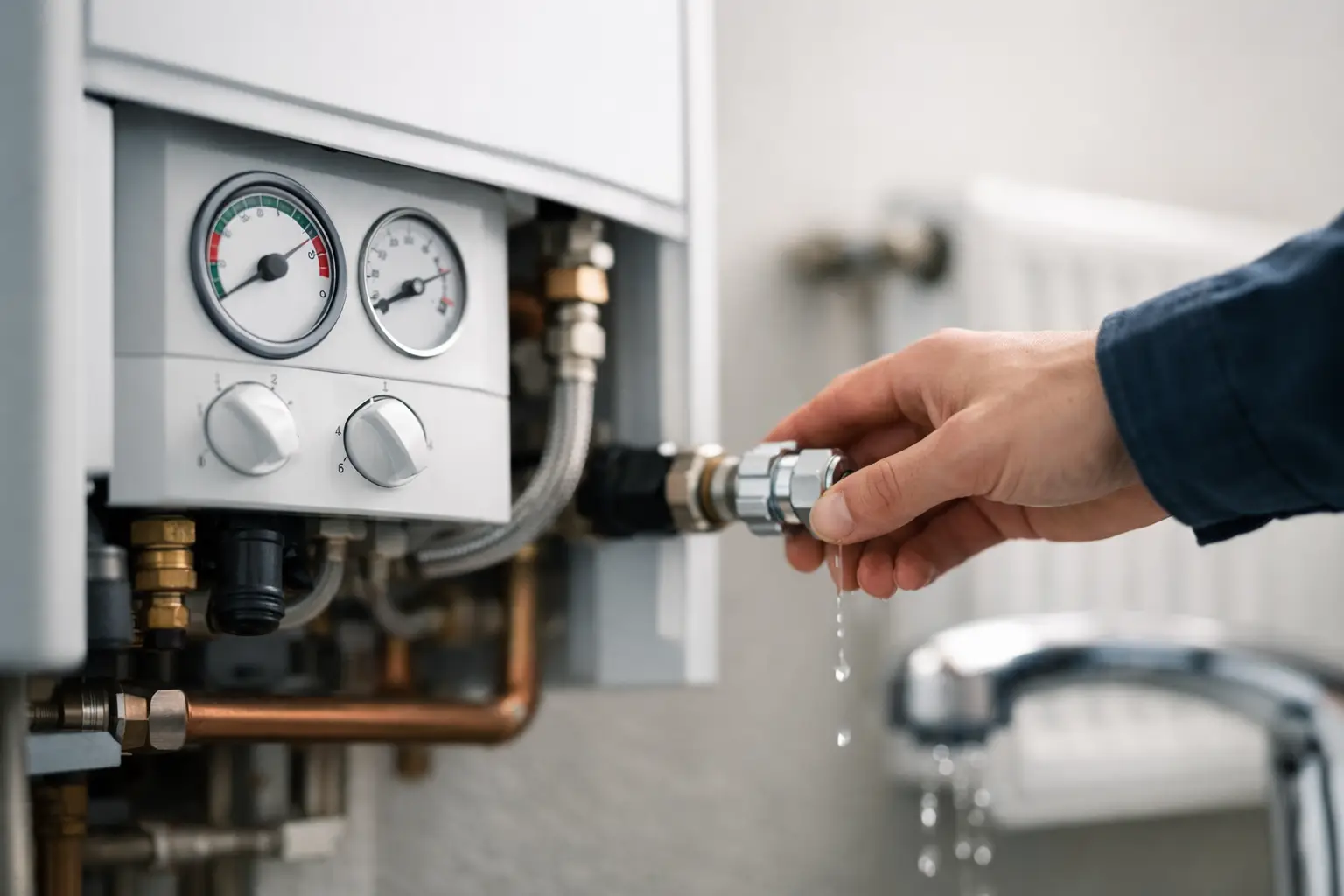
Check the gauge after bleeding, with the system cool. If it is below the manufacturer’s recommended cold pressure, use the filling loop or integrated filling key as instructed in your boiler manual. Open it slowly, watch the gauge, and stop at the correct level. Do not overfill the system.
The pressure relief valve has discharged
Your boiler has a pressure relief valve, often called a PRV, which is designed to release water if pressure rises too high. This protects the boiler and heating system. The valve normally discharges through a copper pipe that leads outside, commonly near an external wall.
If you see water dripping from that pipe, especially when the heating is on, the system may be over-pressurising. The valve can then fail to reseal fully, allowing pressure to fall afterwards. This is not a fault to ignore. The cause may be a worn PRV, but it can also be linked to the expansion vessel inside the boiler.
A faulty expansion vessel
Water expands as it warms. The expansion vessel provides space for that increase in volume, preventing the pressure from rising too sharply. When its internal charge is lost or its diaphragm fails, boiler pressure can climb quickly as the heating warms up, then drop low again once it cools or water is released via the PRV.
A useful clue is a gauge that moves dramatically: perhaps 1 bar when cold, then close to 3 bar while the heating is running. This needs professional diagnosis and repair. Simply adding more water will not correct an expansion vessel problem.
A problem inside the boiler
Internal components can also leak or fail, including the heat exchanger, automatic air vent, pump seals or hydraulic connections. Because these parts sit behind the boiler casing, they should only be assessed by a Gas Safe registered engineer. Do not remove the case yourself, even if the boiler appears to be switched off.
What you can safely check before calling for help
Start by looking at the pressure gauge with the boiler cold. If it is modestly low and you have recently bled radiators, topping it up once may be all that is required. Follow the instructions for your specific boiler, as filling arrangements vary by manufacturer and model.
Then take a few minutes to check visible parts of the heating system. Inspect radiator valves and exposed pipe joints, look beneath the boiler for signs of drips, and check the outside discharge pipe for water. You can also make a note of the pressure reading before turning the heating on, then check it again after the system has been running for an hour.
This pattern helps narrow down the cause. A steady, slow fall over several weeks may suggest a minor leak. A sharp rise when heating is on followed by a drop when it cools points more towards an expansion vessel or PRV issue. Either way, it gives your engineer useful information from the outset.
Avoid adding leak-sealing products to a boiler system without professional advice. They can sometimes be suitable in limited circumstances, but they are not a reliable answer to every leak and may complicate future work. Also avoid repeatedly topping up the pressure. Fresh water introduces oxygen and minerals, which can contribute to corrosion and sludge over time.
When low boiler pressure needs an engineer
Arrange a repair visit if the pressure falls again after you have topped it up, if you can see a leak, or if the boiler displays a fault code that does not clear once pressure has been restored. You should also call an engineer if the gauge rises towards 3 bar during heating, the outside discharge pipe is dripping, or the boiler has stopped providing heating or hot water.
For landlords and small business property operators, a boiler that repeatedly loses pressure should be dealt with promptly. Aside from disruption to occupants, an unresolved fault can develop into a larger repair, particularly if water is reaching hidden parts of the property or the boiler is cycling on and off unnecessarily.
If you smell gas, suspect a gas leak, or feel unwell with symptoms that could relate to carbon monoxide, do not investigate the boiler. Turn off the gas supply only if it is safe to do so, ventilate the property, leave the area and seek urgent professional advice. Low water pressure itself is not normally a gas emergency, but any gas safety concern must be treated separately and seriously.
How to reduce repeat pressure problems
Regular boiler servicing is the most practical way to catch pressure-related faults early. During a service, an engineer can check the expansion vessel, PRV, seals, pipework connections and overall condition of the heating system. They can also identify sludge or corrosion that may be affecting performance.
It is also worth having radiators balanced and the system cleaned when there are signs of cold spots, discoloured water, persistent noise or poor circulation. A clean, correctly treated system is easier on the boiler and helps protect components that are costly to replace.
If your boiler is older and pressure loss is becoming one of several recurring faults, repair may not always be the most economical route. The right decision depends on the boiler’s age, repair history, condition and the availability of parts. A clear assessment and fixed quotation make it easier to decide whether a repair or replacement offers better long-term value.
Walsh Plumbing & Heating can diagnose recurring low boiler pressure, explain the cause in plain English and carry out the work needed to restore reliable heating. You should never have to keep guessing at the gauge – a properly functioning system should give you warmth and hot water without becoming another job on your weekly list.