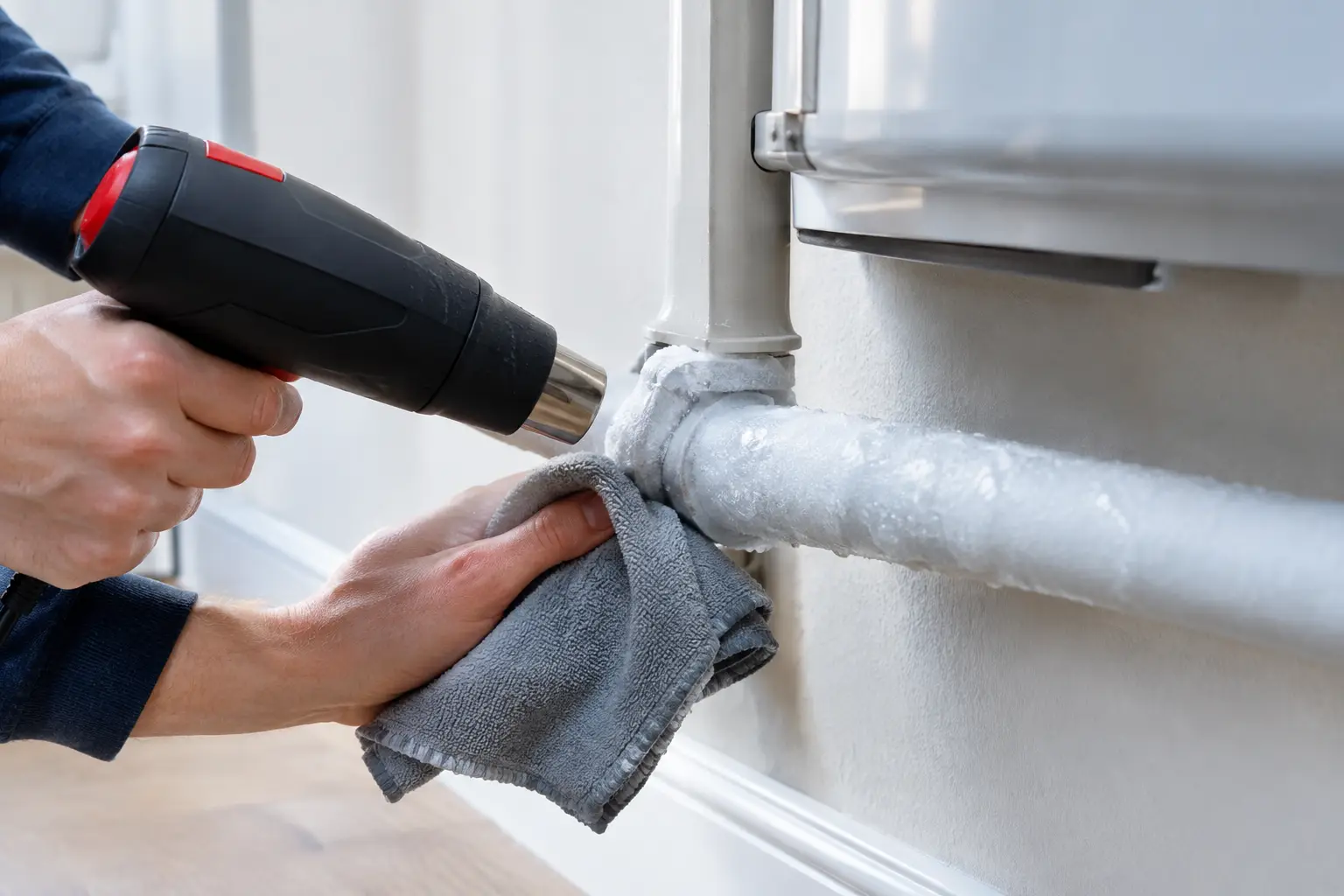
A boiler that stops working during a cold snap is stressful, particularly when the radiators are cold and there is no hot water. In many cases, the fault is a frozen condensate pipe. Knowing how to thaw a condensate pipe safely can get your heating back on without causing damage to the boiler, pipework or your property.
Modern condensing boilers produce acidic wastewater, known as condensate, during normal operation. This flows away through a small plastic pipe, often routed outside. When temperatures fall below freezing, water inside an exposed section can freeze and form a blockage. Your boiler then shuts down as a safety measure.
Signs your condensate pipe has frozen
Before attempting a fix, look for the common signs. The boiler may display a fault code, stop firing, or make a gurgling sound. Depending on the manufacturer and model, you may see a code such as EA, F1 or a frozen-condensate warning. Check your boiler manual for the exact meaning of any code shown.
The condensate pipe is usually a white or grey plastic pipe, around 21mm to 32mm wide. It often leaves the boiler and runs through an external wall before entering an outside drain or soil pipe. The most likely frozen point is the section outside, especially where the pipe is narrow, poorly insulated, horizontal or exposed to wind.
A frozen condensate pipe is particularly likely if your boiler was working normally before a hard frost, and there is no obvious issue with your gas supply, electricity supply or system pressure. If you smell gas, see water leaking from the boiler, or suspect any other fault, do not assume the condensate pipe is the cause. Turn the boiler off and arrange professional help.
How to thaw a condensate pipe safely
Start by switching the boiler off at its controls. You do not usually need to isolate the electricity supply, but never remove the boiler casing or interfere with internal components.
Locate the outside section of the condensate pipe. If it is at ground level and safely accessible, feel along the pipe carefully. It may feel extremely cold, look frosted or appear slightly swollen around the frozen section. Do not climb ladders, lean from windows or work in a place with icy footing. A heating failure is not worth a fall.
Use warm water to thaw the pipe gradually. The water should be warm, not boiling. Boiling water can soften, crack or split plastic condensate pipework, particularly when it is already cold and under strain. Fill a watering can, jug or bottle with warm water and pour it slowly over the outside pipe, concentrating on the suspected blockage.
Begin at the end nearest the drain and work back towards the boiler. This gives melting water somewhere to escape. Repeat as necessary until you can hear or see water flowing freely into the drain. A hot water bottle or warm, damp cloth held around the pipe can also help where pouring water is impractical.
Once the blockage has cleared, dry the area as far as possible to reduce the risk of ice forming underfoot. Turn the boiler back on, then use the reset button only as instructed in the manufacturer’s manual. Most boilers need just one reset after the condensate has thawed. If it does not restart, do not keep pressing reset repeatedly. This can mask another fault and will not clear a blockage that remains frozen further along the pipe.
What not to use
Never use a naked flame, blowtorch, heat gun, boiling water, sharp tools or excessive force on condensate pipework. These methods can damage the pipe or surrounding fittings, creating a leak once temperatures rise. Avoid trying to cut the pipe open or take apart connections yourself. Condensate is mildly acidic, and incorrectly reassembled pipework can allow it to escape into the property.
It is also sensible to avoid chemical drain cleaners. They are not designed to solve a frozen pipe problem and may damage pipework or drainage components.
When you should call a heating engineer
A simple external freeze can often be resolved with warm water, but it depends on where the pipe runs and how accessible it is. Call a qualified heating engineer if the pipe is high up, boxed in, buried, cracked, repeatedly freezing, or if the boiler still will not operate after thawing and one reset.
You should also arrange professional support if you cannot identify the condensate route, the fault code is unclear, or there is water leaking inside the boiler cupboard. A boiler may lock out for several reasons, including low system pressure, ignition faults, frozen external pipework or a drainage issue. Proper diagnosis avoids unnecessary repairs and gets to the real cause.
For natural gas boilers, any work involving the boiler itself should be carried out by a Gas Safe registered engineer. This is especially important where the condensate connection is close to the appliance or where repairs may affect safe boiler operation.
Stop the condensate pipe freezing again
If your condensate pipe freezes once, it is worth reviewing the installation before the next cold spell. A permanent solution may be straightforward, but it should be correctly designed rather than patched over.
External condensate pipework is generally less likely to freeze when it is as short as practical, runs with a suitable fall towards the drain and uses a larger pipe diameter. In many cases, 32mm pipe is preferable for external runs because it takes longer to freeze than narrower pipework. Suitable weather-resistant insulation can provide further protection, although insulation alone cannot always prevent freezing in prolonged sub-zero temperatures.
Where practical, rerouting the condensate pipe internally is often the most reliable option. This is not possible in every property, and the drainage arrangement needs to be assessed properly. An engineer can advise whether a revised route, larger external pipe, improved insulation or a combination of measures is appropriate for your home.
Keeping your heating on at a low, steady temperature during severe weather can also help reduce the risk. This is especially useful in empty properties, rental homes and small commercial premises. However, it is not a substitute for correcting an unsuitable external condensate run.
A quick check before the next frost
When freezing weather is forecast, check that the outside drain is clear of leaves, garden debris and standing water. Make sure any visible pipe insulation is intact and secure. If the boiler has frozen before, keep a watering can or hot water bottle available so you are not searching for a solution when the heating stops.
Avoid covering boiler flues, vents or air bricks in an effort to protect pipework. These components must remain clear for the boiler to operate safely. Only insulate the condensate pipe itself with suitable material, and do not block access points needed for servicing.
A frozen condensate pipe is often a manageable winter problem, but repeated boiler lockouts are a sign that the pipework needs attention. Walsh Plumbing & Heating can assess the cause, make safe alterations and help protect your heating from the next cold spell, so you can rely on your boiler when you need it most.