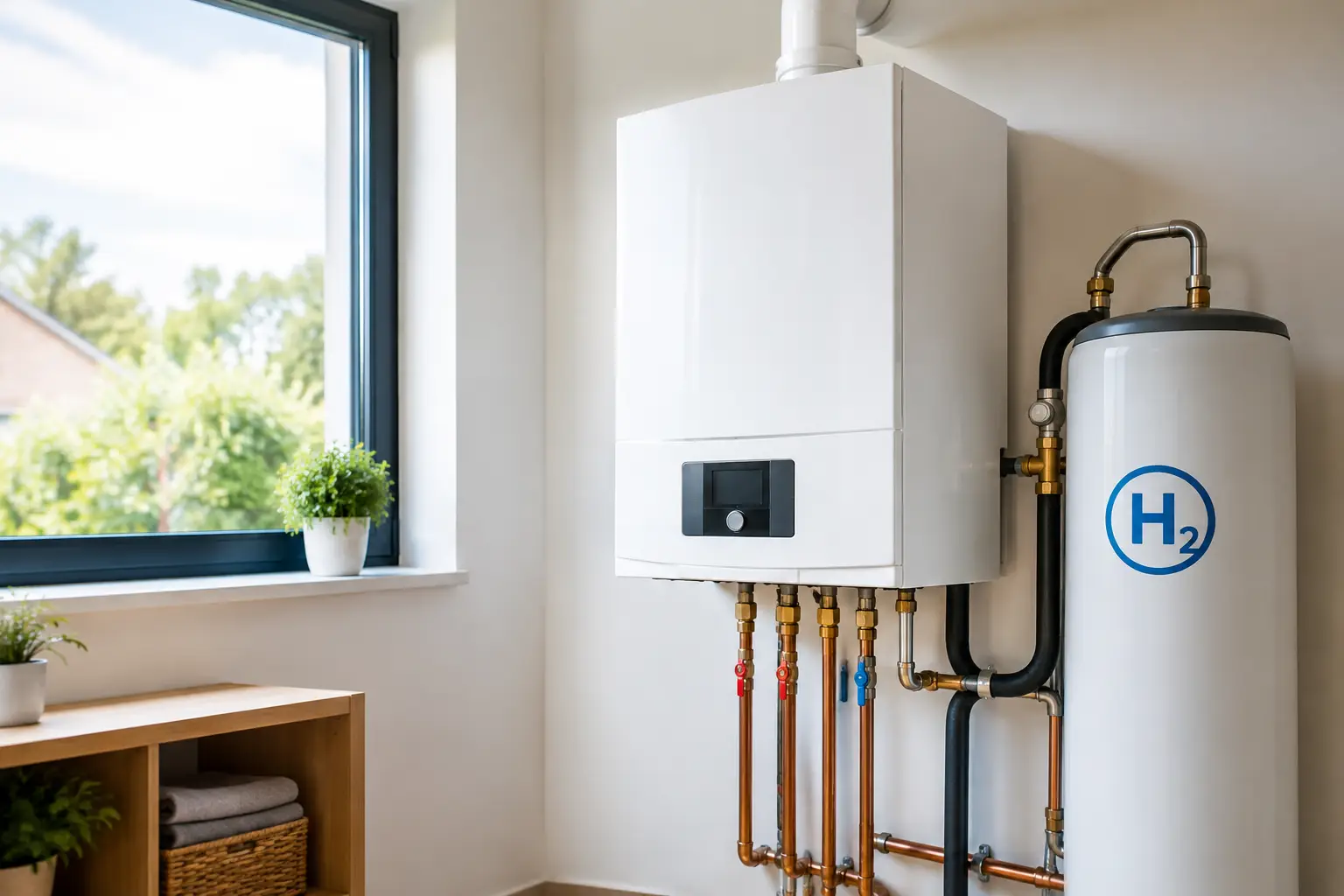
A boiler replacement is a major decision, particularly when your current system is unreliable and the house needs dependable heat now. Hydrogen boilers are often presented as a possible part of lower-carbon home heating, but for most households in Hertfordshire, they are not yet a product you can simply choose, fit and use. The right answer depends on your existing heating system, your property’s insulation and what fuel supply will be available locally in years to come.
What are hydrogen boilers?
A hydrogen boiler heats your radiators and hot water in much the same way as a familiar natural gas boiler. The difference is the fuel it is designed to burn. Rather than relying solely on natural gas, it would run on hydrogen, a gas that can be produced using different energy sources.
When hydrogen burns, the main direct by-product is water vapour. That makes it attractive as a potential way of reducing carbon emissions from heating. However, the full environmental benefit depends on how the hydrogen is made and transported. Hydrogen made using renewable electricity has a different carbon footprint from hydrogen produced using fossil fuels with carbon capture.
For homeowners, the key point is simpler: a hydrogen-ready boiler is not the same as a hydrogen supply. A boiler can only run on hydrogen when the local gas network has been converted and the appliance has been approved, installed and commissioned for that fuel.
Are hydrogen boilers available in the UK now?
Not as a standard, widely available domestic heating choice. Manufacturers have developed prototype and hydrogen-ready appliances, and hydrogen heating has been considered in trials and wider energy planning. But there is no confirmed national changeover that means most UK homes will soon receive 100% hydrogen through the existing gas network.
That distinction matters if your boiler has failed. Waiting for a future hydrogen rollout could leave you with an inefficient, unreliable system for years, with no certainty that your street will be included. A modern natural gas boiler remains a practical option for homes connected to the gas network, while heat pumps are already an established lower-carbon alternative for suitable properties.
Some discussions also refer to hydrogen blends, where a proportion of hydrogen is mixed into the natural gas supply. This is different from running a home on 100% hydrogen. Any blending programme would need to be managed by the gas network, and appliance compatibility, local arrangements and safety requirements would all need to be confirmed. Never alter an appliance or fuel supply yourself in an attempt to use hydrogen.
What does hydrogen-ready mean?
A hydrogen-ready boiler is generally designed to operate on natural gas initially and be converted to hydrogen by a qualified engineer if a future local network conversion takes place. The conversion may involve changing components, settings and labelling, followed by proper safety checks and commissioning.
The phrase can sound reassuring, but it should not be the only reason to choose a new boiler. Before treating it as a benefit, ask the installer exactly what the manufacturer means by hydrogen-ready, what conversion work would be required, whether it affects the warranty and what evidence supports the claim.
A boiler’s efficiency, correct sizing and installation quality will affect your bills and comfort from day one. A possible future conversion is secondary to getting those essentials right now.
Hydrogen boilers and existing gas boilers
Most existing natural gas boilers should not be assumed to be suitable for 100% hydrogen. Hydrogen behaves differently from natural gas and has different combustion characteristics. It needs appliances, pipework and safety arrangements that have been specifically assessed for its use.
That does not mean every part of a heating system would automatically need replacing in every future scenario. It does mean that no one should promise a straightforward conversion without knowing the final network standards, the boiler model and the condition of the installation. If a supplier ever plans a local conversion, homeowners would need clear information and approved support.
The benefits and limitations for homeowners
Hydrogen could offer a familiar heating experience. If a property were supplied with hydrogen through a suitable network, residents could continue using radiators, controls and stored hot water cylinders in broadly recognisable ways. This may be especially relevant for certain older or harder-to-insulate buildings where installing a heat pump needs more design work.
There are also real limitations. Producing low-carbon hydrogen at scale requires considerable energy and infrastructure. Supply, price, network conversion and long-term policy are still uncertain. Hydrogen also needs to be handled carefully: as with natural gas, installation and maintenance must only be carried out by appropriately qualified professionals.
Burning hydrogen is not automatically free from every emissions issue either. While it does not produce carbon dioxide at the point of use, combustion at high temperatures can still create nitrogen oxides. Appliance and system design remain important.
For this reason, hydrogen is best viewed as a developing option, not a reason to delay necessary heating work. The most cost-effective decision today may be improving the system you already have, replacing an old boiler with a high-efficiency model, or assessing whether a heat pump is suitable.
Should you replace your boiler with a hydrogen-ready model?
It depends on the appliance available, the guarantee offered and your plans for the property. If your current boiler is beyond economical repair, a replacement needs to deliver reliable heating immediately. Do not pay a premium simply for a future feature unless the product’s specification, warranty and value make sense for you today.
For many households, the priority should be a correctly sized modern boiler, installed cleanly with appropriate controls and system protection. A powerflush or chemical clean may be needed where sludge has built up in the radiators and pipework. Magnetic filtration, inhibitor and annual servicing can also protect a new boiler and help maintain efficient operation.
Landlords and small business operators should take an equally practical approach. Reliable heating, valid safety records where required and minimal disruption to tenants or operations are immediate responsibilities. Future heating policy is worth monitoring, but it does not remove the need for a safe, efficient system now.
Hydrogen boilers or heat pumps?
Heat pumps are available now and can be an excellent choice for many homes. They move heat from the air outside into your property rather than creating it by burning fuel. They work particularly well in well-insulated homes with correctly sized radiators or underfloor heating, although many existing properties can be upgraded successfully following a proper survey.
A heat pump is not automatically the best answer for every building. Space for an outdoor unit, insulation levels, radiator capacity, hot water demand and electrical supply all need consideration. Upfront costs and the work needed to improve the property can be higher than a like-for-like boiler replacement, though grants and running costs may change the calculation.
Natural gas boilers remain compact, familiar and capable of supplying high-temperature water quickly. Where a property is not ready for a heat pump, a new efficient boiler may be the sensible route while you improve insulation, controls and the heating distribution system over time. That is a planned transition, not a compromise.
Questions to ask before making a heating decision
A professional survey should look beyond the boiler itself. Ask whether your current appliance is genuinely beyond repair, whether your radiators and controls are working efficiently, and whether the system has been maintained properly. It is also sensible to ask how long the proposed boiler guarantee lasts, what it covers and what servicing is needed to keep it valid.
If hydrogen is part of your thinking, ask whether there is any confirmed local network plan for your postcode. Be wary of vague promises. A clear answer should separate what is available now from what may happen in the future.
At Walsh Plumbing & Heating, we help homeowners make heating choices based on their property, budget and immediate needs, with straightforward advice and a fixed quote before work begins. Whether you need an urgent boiler replacement, a repair, or an assessment of heat pump suitability, the aim is the same: dependable heating without unnecessary uncertainty.
The best time to plan a future-ready home is before a winter breakdown forces the decision. Start with the system you have, the comfort you need and the improvements that will make a difference today.