A dripping tap is annoying. Water appearing beneath the bath panel, around the toilet base or on the ceiling below is different. Bathroom leak repair should be dealt with promptly because even a small, hidden leak can damage flooring, plasterboard, joists and neighbouring rooms long before it becomes obvious.
The right response is not always to replace a fitting immediately. Some leaks come from a worn washer or failed seal, while others point to loose pipework, cracked grout, damaged waste connections or a problem behind a tiled wall. Identifying the source accurately is what prevents a temporary fix becoming an expensive repeat job.
What to do when you find a bathroom leak
First, stop using the affected shower, bath, basin or toilet if you can. If water is actively running or pooling, turn off the local isolation valve where one is fitted. For a toilet, this is usually on the pipe leading to the cistern. For a basin, look beneath the unit. If you cannot safely isolate the fitting, turn off the mains water supply and call a qualified plumber.
Move towels, toiletries and electrical items away from the area, then dry visible water to limit damage. Take a few clear photographs before dismantling anything. This can be useful if you need to make an insurance claim or explain the issue to a plumber.
Avoid the temptation to keep testing the fitting repeatedly. Running a shower to see whether a ceiling stain worsens may send more water into the structure of your home. A plumber can carry out controlled checks to trace the source without adding unnecessary moisture.
Common bathroom leaks and what causes them
A leak is not always directly beneath the fitting that appears to be at fault. Water can travel along pipes, under flooring and across ceiling voids, so the visible damp patch may be some distance from its origin.
Leaking taps and basin waste pipes
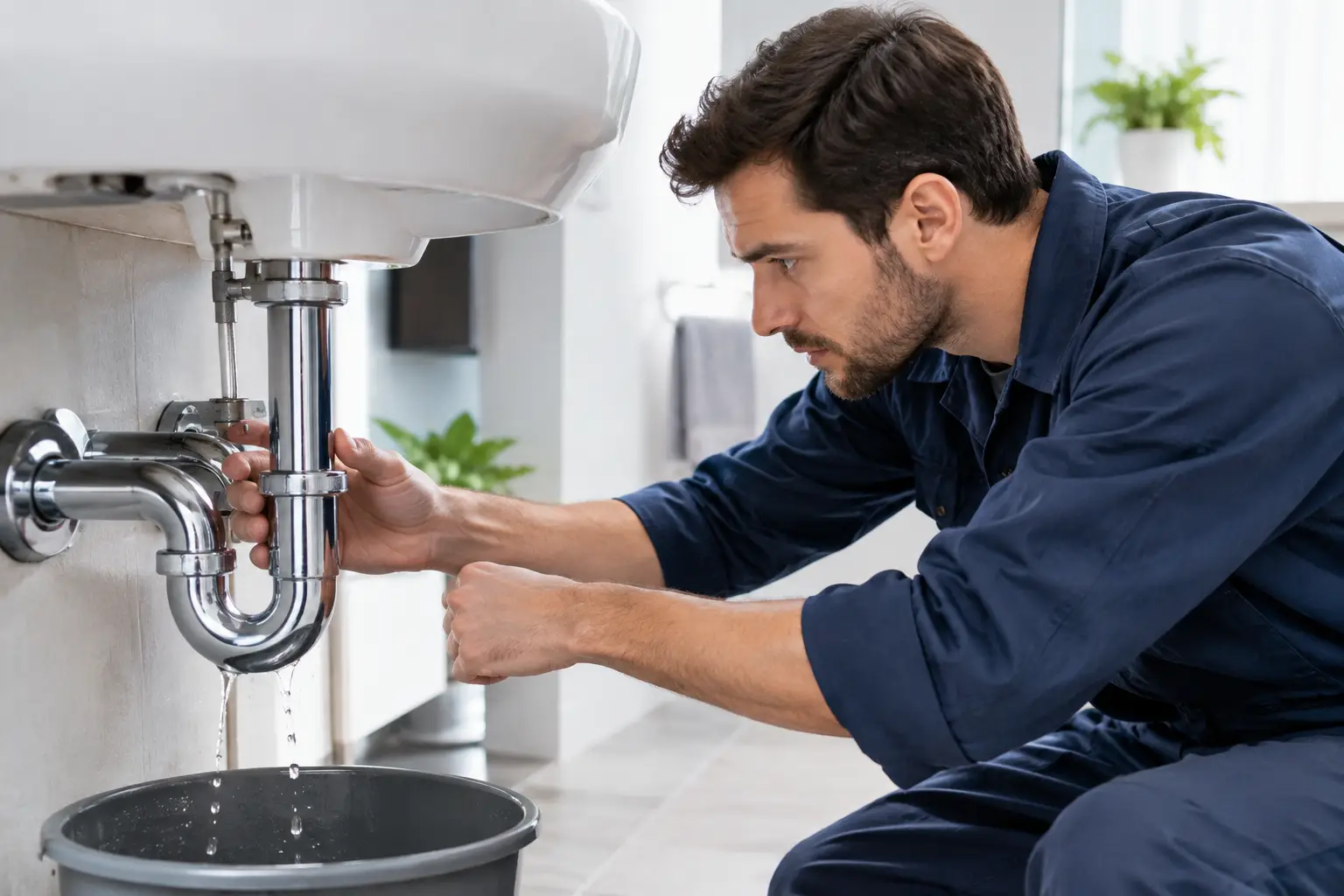
A tap that drips into the basin is usually caused by a worn cartridge, valve or washer. It may seem minor, but the constant flow wastes water and can leave limescale around the spout. Water collecting inside the vanity unit is more urgent. The cause could be a loose trap, a failed waste seal or a cracked flexible connector.
These repairs are often straightforward when the pipework is accessible. However, overtightening plastic waste fittings can crack them, and silicone applied around a joint will not repair a failed compression fitting. The damaged component needs to be repaired or replaced properly.
Shower leaks behind tiles or screens
Showers produce more water exposure than any other bathroom fitting. Leaks can develop around a shower tray, screen seal, shower valve or waste outlet. Failed grout and silicone are also common, particularly where movement has opened a fine gap between the tray and wall.
Fresh sealant can help where the existing seal has genuinely failed, but it is not a cure for a leaking waste or damaged waterproof backing behind tiles. If water appears in the room below only after showering, stop using the shower until the cause has been investigated.
Bath leaks that only happen when it is full
A bath can hold water without leaking, then drip once someone gets in. That often indicates movement around the waste fitting, overflow or bath edge. A loose waste connection may only open under the weight of a full bath, while a split overflow pipe may leak only when the water level is high.
Access beneath a bath can be limited, especially where panels have been tiled in. A professional repair should include suitable access for future maintenance rather than leaving essential pipework permanently hidden.
Toilet leaks at the base or cistern
Water around a toilet should never be ignored. A loose inlet connection, faulty flush valve or deteriorated seal can leak from the cistern. Water at the base may be condensation, a spill from the cistern, or a failed pan connector or waste seal.
If the water is clean and appears only after flushing, the toilet waste connection needs attention. If there is any doubt about the source, avoid using the toilet until it has been checked. Waste leaks are unpleasant, can affect hygiene and may damage the floor beneath the pan.
When bathroom leak repair is an emergency
Not every drip requires an out-of-hours visit, but some warning signs need a fast response. Call for urgent help if water is coming through a ceiling, close to lights or electrical fittings, if a pipe has burst, or if you cannot isolate a significant flow of water.
A sudden loss of water pressure, a continuously filling toilet cistern, or a leak from a concealed pipe also deserves prompt attention. If water has reached an electrical fitting, do not touch it. Turn off the relevant electrical circuit only if it is safe to do so, and seek professional advice.
For landlords and small business operators, responding quickly is also essential for protecting tenants, customers and the building itself. A small leak left over a weekend can cause disruption that far exceeds the cost of an early repair.
Why finding the source matters more than covering the symptoms
Sealant, tape and absorbent cloths can reduce immediate mess, but they rarely solve the underlying problem. A bathroom contains several possible water routes: supply pipes, wastes, overflows, shower valves, tray seals and joints around sanitaryware. Treating the wrong one may hide the issue while water continues to escape behind finishes.
A plumber will assess when the leak occurs. Does it happen when the tap runs, when the shower is used, only during flushing, or only when the bath is filled? That pattern is a valuable clue. They can then inspect accessible connections, test fittings in stages and check for signs of moisture around surrounding surfaces.
The repair should be proportionate to the cause. Replacing a worn seal may be all that is needed. In other cases, pipework may need to be renewed, a damaged shower waste reset, or a tray and enclosure refitted to create a reliable watertight finish. Clear explanation matters here: you should know what has failed, what work is required and what the quoted price covers before work begins.
Protecting your bathroom after a repair
Once the leak has been fixed, do not rush to repaint or cover water marks. Floors, ceilings and wall cavities need time to dry fully. Where water damage has been substantial, a decorator, flooring specialist or insurer may need to be involved after the plumbing repair is complete.
You can reduce the chance of future problems by checking beneath the basin periodically, watching for cracked silicone around the bath and shower tray, and dealing with slow drainage before it becomes a blockage. Keep bathroom ventilation working too. Condensation does not usually create a plumbing leak, but it can make dampness harder to diagnose and encourage mould growth.
If you are planning a bathroom refresh, ensure wastes, isolation valves and key connections remain accessible where practical. Good installation is not only about how a bathroom looks on day one. It should also allow future servicing without unnecessary disruption.
Professional bathroom leak repair in Hertfordshire
For homeowners, landlords and local businesses, a reliable repair starts with an accurate diagnosis and honest advice. Walsh Plumbing & Heating provides professional plumbing support across Hertfordshire and surrounding areas, with work explained clearly and carried out with respect for your property.
Whether the issue is a leaking shower, bath waste, toilet connection or concealed pipework, acting early gives you the best chance of limiting damage. If you have noticed damp, staining or unexplained water around a bathroom fitting, arrange an inspection before a small leak has the opportunity to spread.