A boiler failure on a cold morning rarely feels like the right time to make a major heating decision. Yet when replacement is needed, the question of boiler or heat pump comes up quickly. Both can provide dependable warmth and hot water, but the best choice depends on your property, current system, budget and plans for the years ahead.
A new natural gas boiler is often the most straightforward route for homes with an existing gas supply and wet central heating system. A heat pump can offer lower-carbon heating and excellent efficiency in the right home, but it needs careful design. The answer is not simply which system is newer. It is which one will keep your home comfortable, affordable to run and practical to live with.
Boiler or heat pump: start with your home
The most useful first step is to look at the property rather than the headlines. Is the home well insulated? How much heat does it lose on the coldest winter day? Is there room for a hot water cylinder? Are the radiators sized for lower-temperature heating? Do you have a suitable outdoor position for a heat pump unit?
A professional survey should answer these questions before anyone recommends a system. It should also consider how many people use hot water, whether you are extending the property and the condition of your existing pipework and radiators. Good heating decisions are based on heat-loss calculations and real household needs, not a one-size-fits-all recommendation.
What a modern gas boiler does well
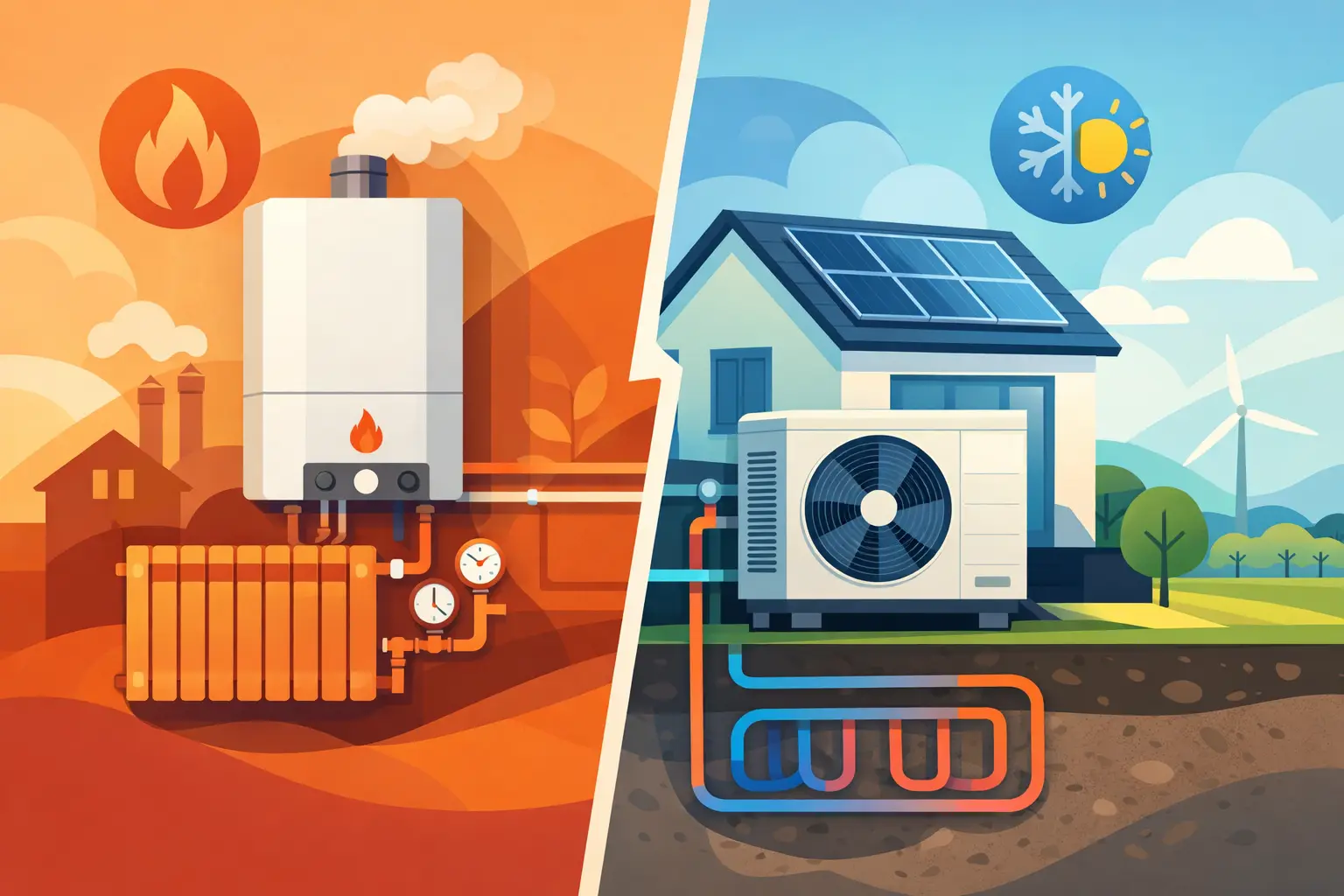
A modern condensing gas boiler produces heat at higher flow temperatures than a heat pump. This means it works comfortably with many existing radiator systems and can provide hot water on demand when installed as a combi boiler. For smaller homes and flats where space is limited, that can be a significant advantage.
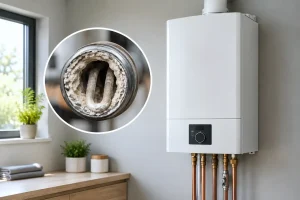
Boiler replacement is usually less disruptive when the home already has a gas connection, suitable flue route and working central heating pipework. Installation can often be completed quickly, which matters when your existing boiler has failed or is becoming unreliable. A quality installation should include correct sizing, system cleansing where needed, controls setup and clear advice on maintaining the manufacturer guarantee.
Natural gas remains a familiar and practical heating option for many Hertfordshire homes. A boiler can also be a sensible choice if the property is poorly insulated at present, has limited outdoor space or cannot easily accommodate a cylinder.
What a heat pump does differently
An air source heat pump takes heat from the outside air and moves it into your home. It uses electricity to do this, rather than creating heat through combustion. Because it transfers energy, it can provide several units of heat for each unit of electricity used when the system is designed and operated correctly.
Heat pumps work best over longer periods at lower water temperatures. Rather than short, very hot bursts of heating, they maintain a steady, even indoor temperature. That can feel very comfortable, but it is a change from the way many households use a gas boiler.
Most heat pump systems use a hot water cylinder. They also need an external unit, appropriate pipework and controls that have been designed around the home. Some existing radiators may be suitable, while others may need to be enlarged to deliver enough heat at lower temperatures. That does not mean every radiator must be replaced, but it must be checked room by room.
Upfront cost and disruption
For like-for-like replacement, a gas boiler generally has the lower upfront cost. The work is familiar, fewer changes are usually needed and the existing system can often be retained. Costs rise if a new flue arrangement, major pipework changes or radiators are required, so a fixed quote should set out exactly what is included.
A heat pump installation can cost more because it may involve a cylinder, electrical work, upgraded radiators, insulation improvements and new controls. Government support may be available for eligible homes at the time you apply, but grant rules and amounts can change. It is worth checking eligibility before making decisions based on a headline figure.
Disruption should be part of the calculation, not an afterthought. If your property needs radiator changes, a cylinder installation and insulation work, a heat pump project needs planning. If your current boiler has failed and you need heat restored quickly, replacing it with an efficient boiler may be the more realistic immediate solution.
Running costs: efficiency is not the whole story
It is tempting to assume that a heat pump will always cost less to run because it is highly efficient. In practice, running costs are affected by electricity and gas tariffs, the temperature you choose indoors, your insulation levels, how the system is controlled and the performance of the installation.
A heat pump can be economical when it is correctly sized and run at low flow temperatures in a home with manageable heat loss. Turning it up and down aggressively, or expecting it to work like an older boiler, can reduce performance. A well-controlled system with sensible heating schedules is more likely to deliver the expected results.
A modern gas boiler is not as efficient in the same way, but it can still be an economical option where gas prices, property layout and existing equipment favour it. Keeping return temperatures low, using effective controls and servicing the boiler annually all help it perform properly.
Ask for realistic running-cost assumptions rather than broad promises. A good proposal explains what temperature the system is designed to achieve, how hot water will be provided and what changes to the home are recommended for the best results.
Space, noise and hot water capacity
A combi boiler avoids the need for a separate hot water cylinder, which makes it popular in homes where cupboard space is tight. It supplies hot water as needed, although the flow rate can be a consideration in larger households with more than one bathroom being used at once.
A heat pump usually stores hot water in a cylinder. This can be beneficial for homes with higher demand, but the cylinder needs a suitable location. The external unit also needs clear airflow, a sensible position away from bedrooms where possible and consideration for neighbours. Planning rules can apply, even where an installation may fall within permitted development, so this should be checked early.
Neither system should be selected solely because it fits a trend. The practical details of your home matter every day after installation.
When a boiler is likely to be the better fit
A new boiler is often the sensible option when you need a fast replacement, have an existing gas system in reasonable condition and want minimal changes to radiators or hot water arrangements. It can also suit a compact property where there is no realistic space for a cylinder or external heat pump unit.
For landlords and small commercial property operators, a boiler can be easier to replace within a short maintenance window. Reliability, prompt repairs and clear servicing records are often just as important as the technology itself.
That does not mean choosing a boiler means ignoring efficiency. Correct boiler sizing is essential. An oversized boiler can cycle unnecessarily, while poor controls can waste energy regardless of how new the appliance is.
When a heat pump is likely to be the better fit
A heat pump is worth serious consideration if you are improving insulation, renovating, extending or replacing an older system as part of a planned upgrade. Homes with room for a cylinder, suitable outdoor space and a willingness to adjust radiators where required are often well placed.
It can be particularly attractive for households looking to reduce reliance on gas and take a longer-term view of their heating. The key is to treat it as a whole-home system, not simply as a boiler replacement with a different unit outside.
Some properties may also benefit from a staged approach. Improvements to loft insulation, draughtproofing, controls and selected radiators can make an eventual heat pump installation more effective. There is no harm in preparing the home first if an urgent replacement is not required.
Get the specification right before choosing
The quality of the design and installation matters as much as the equipment. A clear quotation should identify the proposed boiler or heat pump model, system changes, controls, hot water arrangements, radiator work, electrical requirements and any exclusions. You should know who is responsible for commissioning, registration, guarantees and aftercare before work begins.
For gas work, always use a Gas Safe registered engineer. For either option, choose a company that carries out a proper survey, explains the trade-offs in plain English and gives you a price you can understand. You pay what you are quoted, with no hidden costs, is the standard homeowners should expect.
Walsh Plumbing & Heating can assess your current system and property requirements, then explain the realistic options without pushing a solution that does not suit your home. The right heating upgrade should leave you with confidence on the first cold day, not new questions about whether the system was designed for you.