A heat pump is not a like-for-like boiler swap. It changes the way your home produces heat, which is why a proper heat pump installation guide starts with your property, your radiators and how you use hot water – not with a headline price.
For many Hertfordshire homeowners, an air source heat pump can be an effective route to lower-carbon heating and consistent comfort. But the best results come from careful design and accredited installation. Get the sizing or system upgrades wrong, and even a high-quality unit may cost more to run or struggle on the coldest days.
Is a heat pump right for your home?
Heat pumps take low-grade heat from outdoor air and raise it to a useful temperature for heating and hot water. They use electricity, but they can deliver several units of heat for each unit of electricity consumed. Unlike a gas boiler, which produces high-temperature water quickly, a heat pump usually works most efficiently at lower flow temperatures over longer periods.
That does not mean every home needs to be newly built or perfectly insulated before a heat pump can work. Older properties can be suitable too. The question is whether the building’s heat loss, existing emitters and available space can support a well-designed system.
A professional survey should assess insulation levels, draughts, windows, radiator sizes, hot-water demand and the location for the outdoor unit. If your home loses heat quickly, practical improvements such as loft insulation, draught-proofing or upgraded radiators may make a significant difference. These measures reduce the size of heat pump required and help it operate more economically.
For landlords and small business owners, the same principle applies. A survey should consider occupancy patterns, the building’s use and whether tenants or staff need clear guidance on new controls. A heat pump can be a long-term asset, but it needs to be matched to the property rather than selected on assumptions.
The heat pump installation guide: survey to design
The installation process begins with a detailed heat-loss calculation. This is one of the most important stages and should never be reduced to choosing a unit based only on the number of bedrooms. Room-by-room calculations establish how much heat each area needs in cold weather and whether the existing radiators can provide it at lower temperatures.
Choosing the right heat pump size
A larger heat pump is not automatically better. Oversizing can lead to inefficient cycling, while undersizing may leave the property relying heavily on an electric back-up heater during very cold weather. The right capacity depends on the heat-loss calculation, local design temperature, insulation standard and hot-water requirements.
Your installer should also explain the expected flow temperature. Many heat pump systems are designed around flow temperatures of roughly 35 to 55°C, depending on the property and radiators. Lower flow temperatures generally improve efficiency, but they may require larger radiators or underfloor heating in some rooms.
Checking radiators, pipework and hot water
Radiators are often the deciding factor in a heat pump project. Some may be large enough already; others may need replacing with higher-output models. This is not a failure of the system. It is part of designing heating that can provide the required comfort at a lower water temperature.
Pipework must also be assessed. Older or restricted pipe runs may limit water flow and need upgrading. The installer may recommend a magnetic filter, suitable controls and, where required, a buffer vessel or low-loss header. These components should be specified because the system design calls for them, not added without a clear explanation.
Most homes will need a hot-water cylinder because heat pumps heat water more gradually than combi boilers. A suitable cylinder stores hot water for baths, showers and household use. The correct size depends on the number of occupants, bathrooms and daily routines. A busy family home with two showers needs a different design from a one-bedroom flat.
Finding a suitable outdoor location
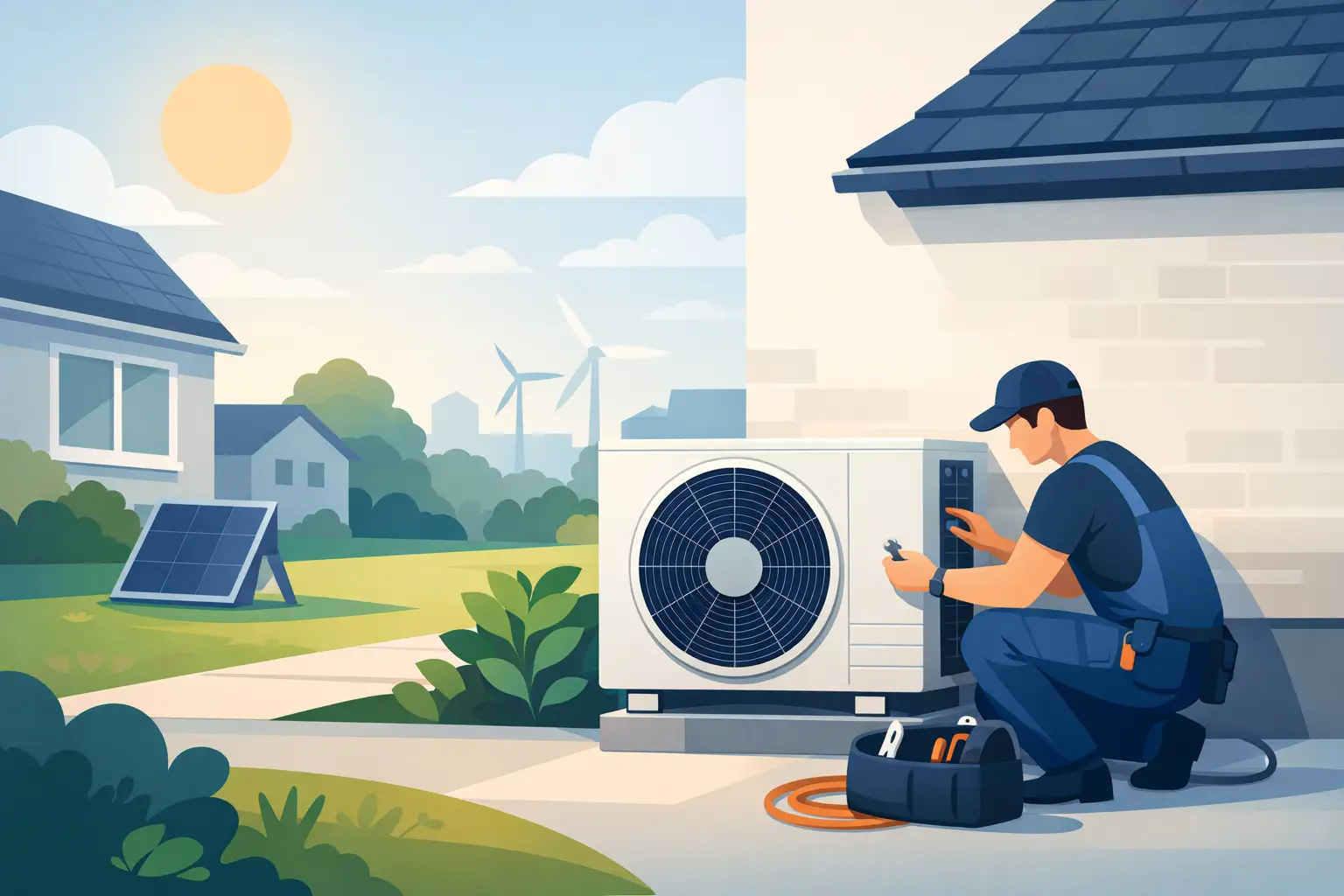
The outdoor unit needs clear airflow and a solid base. It should be positioned where it can be safely maintained, with sensible consideration for neighbours, noise and condensate drainage. Modern units are designed to operate quietly, but location still matters – especially near bedroom windows, boundaries and small gardens.
Your installer should discuss the route for pipework and cabling before work begins. A good installation aims to keep external runs tidy and internal disruption to a minimum. In some cases, planning permission may be required, although many domestic installations fall within permitted development rules. This should be checked for your property rather than assumed.
What happens during installation?
Once the design and quotation are agreed, the work can be planned around your household. The length of installation varies. A straightforward replacement with accessible pipework may be completed relatively quickly, while a project involving radiator upgrades, a new cylinder and electrical work will take longer.
Before starting, agree where equipment and materials can be stored, how engineers will access the property and whether heating or hot water will be unavailable at any point. A professional team will protect work areas, keep you informed and leave the property clean and safe at the end of each day.
The usual sequence is to prepare the outdoor base and mounting, install the heat pump, fit or connect the cylinder, make pipework changes, upgrade radiators where needed, connect electrics and commission the system. If you are replacing a gas boiler, its safe disconnection and removal should be included in the scope of work.
Commissioning is more than switching the system on. The installer checks water flow, pressure, safety devices, controls, hot-water temperatures and heating performance. They should then show you how to use the controller, set schedules and understand the system’s normal operation.
Controls and everyday use
A heat pump rewards a different approach to heating. Rather than turning it on for short bursts at a high temperature, most homes are more comfortable and efficient with steady, programmed operation. Think of it as maintaining warmth rather than constantly catching up after the house has gone cold.
Weather compensation controls can automatically adjust the water temperature according to outdoor conditions. This helps the heat pump avoid working harder than necessary on milder days. Room thermostats and zoning can still be useful, but overly aggressive temperature setbacks may reduce efficiency in a slower-response system.
You should receive clear handover information, including how to boost hot water, use holiday settings, check system pressure and recognise a fault message. If the controls are not explained in plain English, ask before the installer leaves. Good aftercare starts with confidence in using your new system.
Costs, savings and grants: what to consider
Heat pump costs depend on the property and the scope of works. The unit itself is only part of the price. Allow for design, installation, cylinder work, electrical upgrades where necessary, radiator changes, pipework and controls. A fixed quote should set out what is included, what is excluded and whether any work could create additional costs.
Running costs depend on electricity prices, the efficiency of the finished system, insulation, your heating habits and the tariff you use. A heat pump is not automatically the cheapest option for every property, particularly where a home is poorly insulated or the design relies on high flow temperatures. It is worth discussing realistic running-cost expectations rather than relying on generic savings claims.
Government support may be available for eligible properties through schemes such as the Boiler Upgrade Scheme. Eligibility and grant values can change, and not every project will qualify. An installer should explain the current requirements, any paperwork involved and whether the proposed system meets the relevant standards.
Finance can also make a major home-heating upgrade easier to plan. Before choosing any payment option, review the total cost, term and monthly payments, and make sure the installation specification is right for your home first.
Maintenance and long-term reliability
A heat pump needs less routine attention than some heating systems, but it is not maintenance-free. Keep the outdoor unit clear of leaves, garden waste and obstructions so air can move freely. Do not cover it or stack items around it. Check for unusual noises, visible leaks or repeated fault codes, and arrange professional support if something does not seem right.
An annual service can help protect performance, identify small issues early and keep manufacturer warranty conditions on track. The engineer should inspect the system, check operation and safety controls, review pressure and flow, and make sure the outdoor unit is clean and secure.
Choosing an experienced installer matters as much as choosing the heat pump itself. Walsh Plumbing & Heating can provide a clear survey, straightforward quotation and professional advice on whether a heat pump is the right fit for your property. The aim is simple: a heating system you understand, installed neatly and designed to keep working reliably for years to come.