

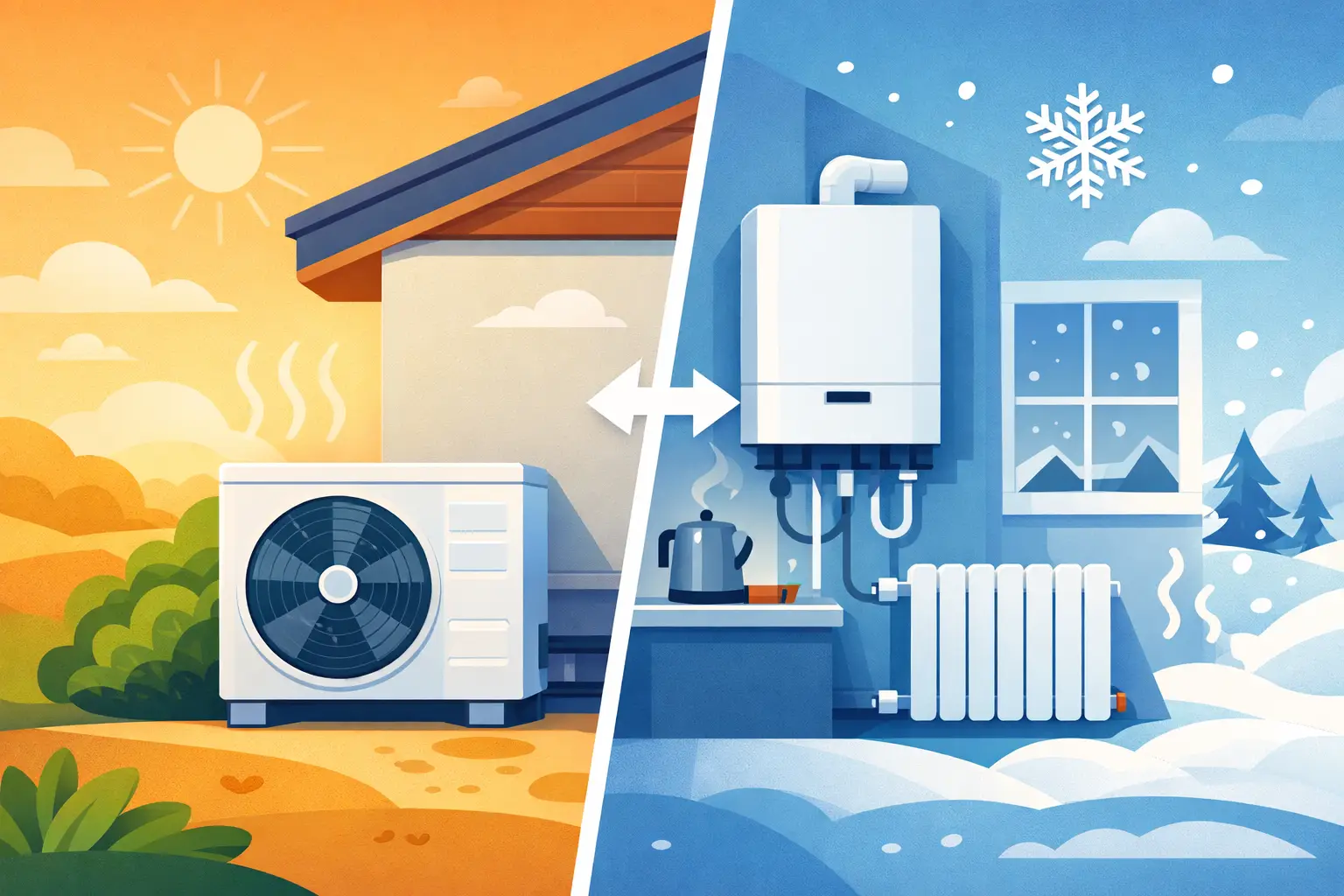
A failed boiler in January rarely feels like the right moment to weigh up renewable technology. Yet a replacement heating system is a long-term decision, and the choice between a heat pump vs boiler can affect your comfort, energy bills and future maintenance for many years.
For many Hertfordshire homes, a modern gas boiler remains the most practical, familiar route to dependable heating and hot water. For others, an air source heat pump offers lower-carbon heating and can be an excellent fit when the property, insulation and heating system are ready for it. The right answer is not a one-size-fits-all product. It is a properly assessed system designed around your home and how you live in it.
Heat pump vs boiler: the main difference
A gas boiler creates heat by burning natural gas. It can heat radiators quickly and provide mains-pressure hot water on demand when paired with a combi boiler. Modern condensing boilers are highly efficient, compact and well suited to a wide range of homes, including properties with limited space.
An air source heat pump moves heat from the outside air into your home. Rather than generating heat by combustion, it uses electricity to transfer available heat, even when temperatures outside are low. Heat pumps normally operate at lower water temperatures than boilers, so they work best with good insulation and radiators or underfloor heating sized to deliver enough warmth at those lower temperatures.
Both can provide comfortable, reliable heating. The difference lies in how they deliver it, what your home needs to support it and the upfront investment involved.
Upfront cost and installation work
Replacing a like-for-like gas boiler is usually the quicker, less disruptive option. If your existing pipework, flue position and controls are suitable, installation can often be completed promptly, which matters when you have no heating or hot water. A fixed quote should set out exactly what is included, from the boiler and controls to system flushing, commissioning and removal of your old appliance.
A heat pump installation needs more planning. An engineer will need to consider heat loss, insulation levels, radiator sizes, cylinder space, external unit location and the electrical supply. Some homes need larger radiators, upgraded pipework or insulation improvements before a heat pump will perform at its best.
This does not mean heat pumps are only for new-build homes. Many existing houses can be successfully converted. However, a proper survey is essential. A heat pump fitted without the right design work may struggle to keep rooms warm efficiently, particularly during cold spells.
Government support may reduce the cost of an eligible heat pump installation, but eligibility, available funding and the work required at your property should always be checked before you make a decision. The most useful comparison is the total installed cost for a system that will genuinely meet your heating needs, not a headline price.
Running costs are not as simple as fuel prices
A boiler uses natural gas, which has traditionally been cheaper per unit than electricity. A heat pump uses electricity but can produce several units of heat for each unit of electricity it consumes. This efficiency is often described as its coefficient of performance.
In real homes, though, running costs depend on more than the appliance. Your insulation, heat loss, thermostat settings, hot-water use, energy tariff and system design all make a difference. A well-designed heat pump running steadily at lower temperatures can be economical. A poorly sized system working hard in a draughty property will not deliver the same results.
A modern boiler can also reduce consumption compared with an ageing, inefficient appliance, particularly when installed with effective controls. Smart controls, thermostatic radiator valves and correct boiler settings can make a noticeable difference without changing the whole heating system.
When comparing quotes, ask for a clear explanation of expected performance and the assumptions behind any savings figure. Honest advice is better than promises that cannot be guaranteed, especially as energy prices can change.
Hot water and everyday comfort
This is one of the biggest practical differences in the heat pump vs boiler decision.
A combi boiler provides hot water as you need it, without a separate hot-water cylinder. It is a popular choice for smaller homes and flats with one bathroom, where space is limited and demand is predictable. Larger households may instead have a system or regular boiler with a cylinder to serve more than one bathroom.
Most heat pumps require a hot-water cylinder. The cylinder stores hot water and is reheated at planned times. This can work very well for family homes, but it needs enough cupboard or utility-room space and should be sized for the household’s usage. If several people need consecutive showers, the cylinder capacity and recovery time must be considered from the start.
Heat pumps are designed to provide steady, consistent warmth rather than the fast bursts of heat many people associate with a boiler. They generally perform best when allowed to maintain a stable indoor temperature. That approach can feel very comfortable, but it may require a change in habits if you are used to switching the heating on only for a few hours each day.
Space, appearance and planning considerations
A boiler is usually installed in a kitchen cupboard, utility room, loft or airing cupboard, depending on the model and regulations. A heat pump has an outdoor unit, similar in appearance to an air-conditioning condenser, plus internal equipment and usually a cylinder.
The external unit needs a suitable location with adequate airflow and consideration for noise, access and your neighbours. Planning rules can vary, especially for listed buildings, flats and properties in conservation areas. A professional survey will identify whether permissions or additional approvals are needed before work starts.
For landlords and small business property operators, the decision should also account for tenant disruption, available plant space and the expected pattern of occupancy. A system that suits a well-insulated family home may not be the best fit for a small commercial unit with irregular heating hours.
Reliability, servicing and future planning
Both options need professional installation and ongoing care. A gas boiler should be serviced annually by a Gas Safe registered engineer to support safety, efficiency and manufacturer warranty requirements. Regular servicing can identify worn components and minor issues before they become an inconvenient breakdown.
Heat pumps also benefit from annual maintenance. This typically includes checking refrigerant components, controls, electrical connections, filters and system pressures. As with any major heating investment, choose an installer who can provide clear commissioning information, explain the controls and remain available for aftercare.
A boiler replacement is often the sensible choice when you need a fast, cost-effective solution and your existing gas central-heating system is working well. It can also be the better option where there is no realistic space for a cylinder or outdoor unit.
A heat pump may be worth serious consideration if you are improving insulation, planning wider renovations, have suitable space and want to reduce reliance on gas over time. It is particularly attractive when the heating system can be designed around lower flow temperatures from the outset.
How to make the right choice for your property
Start with the condition of your current system. If your boiler is unreliable, noisy, costly to repair or nearing the end of its working life, ask for a clear replacement assessment. If you are considering a heat pump, request a detailed heat-loss survey rather than relying on a generic recommendation.
The best installer will ask about your home, number of bathrooms, hot-water habits, radiator performance, insulation and budget. They should also explain any enabling work, expected disruption, warranty cover and the likely timetable. You should know what you are paying for before work begins. No hidden costs, no vague allowances.
Walsh Plumbing & Heating can help homeowners across Hertfordshire assess both options with straightforward advice, accredited workmanship and a clear quotation. Whether you need an urgent boiler replacement or want to plan a move towards heat-pump heating, the first step is choosing a system that will keep your property comfortable without creating avoidable complications.
A heating system should give you confidence on the coldest morning of the year. Choose the option that fits your home as it is today, while making sensible allowance for the improvements you may make tomorrow.
