

If your current boiler is unreliable, noisy or simply not keeping up with demand, the combi vs system boiler question matters more than most homeowners expect. The right choice affects your hot water pressure, your available space, your installation cost and how comfortable your home feels on a cold morning.
A boiler replacement is not something most people want to think about twice. You want a system that suits the property, suits the people living in it and does not leave you regretting the decision a year later. That is why it helps to look past the labels and focus on how each boiler type actually works in day-to-day life.
Combi vs system boiler: the main difference
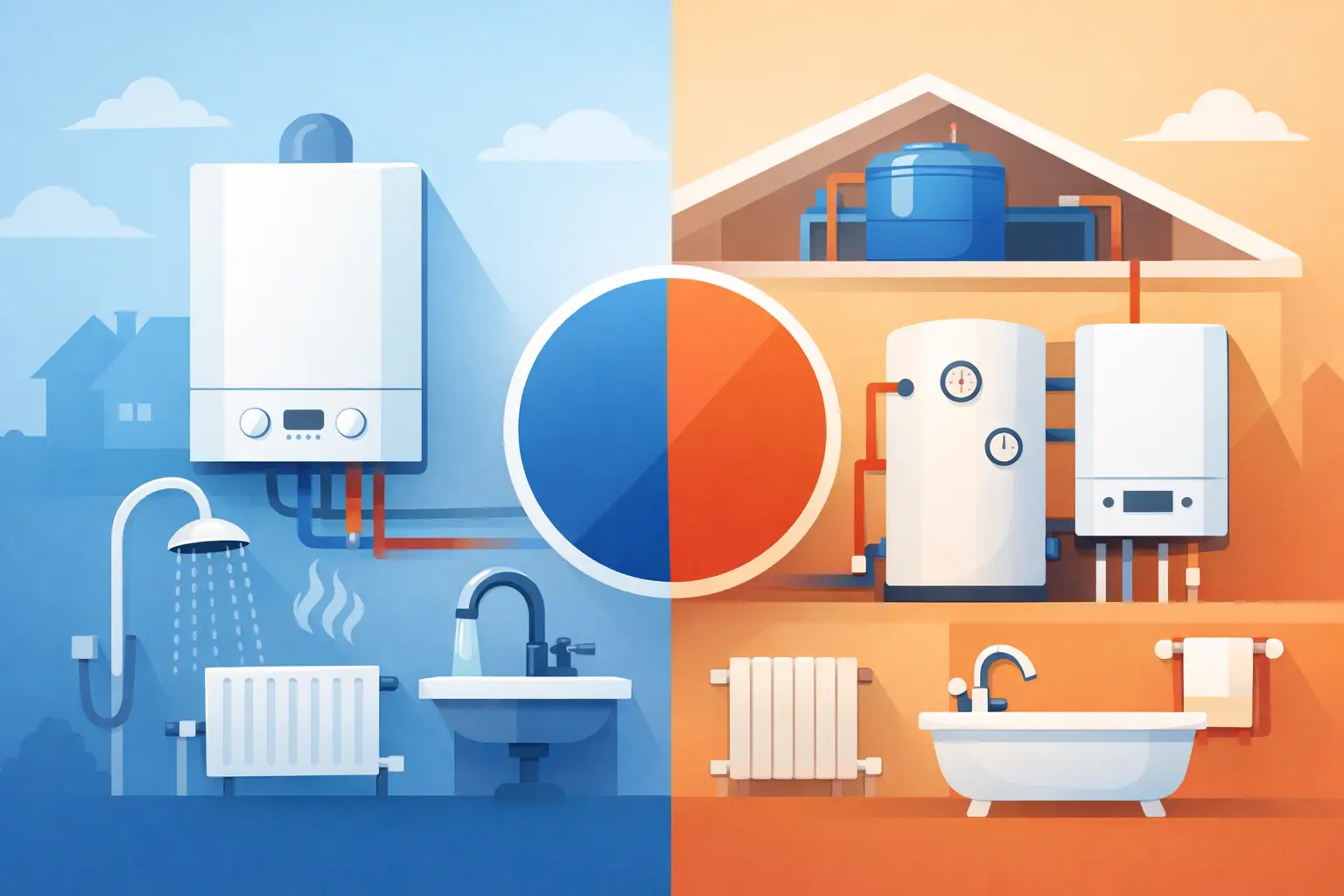
A combi boiler heats water directly from the mains as and when you need it. It does not usually need a separate hot water cylinder or a cold water storage tank in the loft. That makes it a popular choice in smaller homes where space is tight and hot water demand is relatively straightforward.
A system boiler also heats your radiators directly, but it stores hot water in a separate cylinder so it is ready for use when needed. Most of the major heating components are built into the boiler itself, which keeps the installation neat, but you do need room for the cylinder.
In simple terms, a combi is often about saving space and keeping the system compact. A system boiler is usually about handling higher hot water demand more comfortably, especially in homes with more than one bathroom.
When a combi boiler makes sense
For many flats, terraces and smaller family homes, a combi boiler is the practical option. There is no need to wait for a cylinder to heat up, and because hot water is produced on demand, there is no stored tank losing heat over time. If you have one bathroom and your household is unlikely to run multiple showers at once, a combi can be an efficient and cost-effective fit.
Combi boilers are also attractive when you want to free up cupboard or airing cupboard space. If you are replacing an older regular or heat-only setup, moving to a combi can make the home feel less cluttered and reduce the number of components that need maintaining.
That said, there are trade-offs. A combi depends heavily on incoming mains water pressure and flow rate. If the supply into the property is poor, the performance of showers and taps can suffer. In homes where several people want hot water at the same time, a combi may start to feel stretched.
When a system boiler is the better fit
A system boiler tends to suit larger households better. If your home has two bathrooms, an en-suite, or family members using hot water at the same time, stored hot water can make life much easier. Instead of relying on the boiler to heat everything instantly, the cylinder holds a ready supply that can serve several outlets more effectively.
This setup is often a strong option for detached houses and larger semis, especially where there is already a hot water cylinder in place. If the property layout and usage patterns suit it, keeping a stored hot water system can avoid the compromises that sometimes come with changing to a combi.
There are limits here too. Once the cylinder runs out of hot water, you may need to wait while it reheats. A system boiler also takes up more room than a combi, so it is not always ideal if storage space is already limited.
Combi vs system boiler for hot water performance
This is usually where the decision becomes clearer.
With a combi, hot water is heated instantly. That is convenient, but the output is shared. Turn on a second shower or open a hot tap elsewhere and you may notice a drop in pressure or temperature, depending on the boiler size and mains supply.
With a system boiler, the stored cylinder gives you a reserve of hot water. That makes it much better suited to homes where people regularly use hot water in different rooms at the same time. If morning demand is high, or you have teenagers, guests or a busy household routine, this can make a real difference.
Neither option is automatically better. It depends on how your household uses water, not just how many bedrooms the property has.
Space, installation and disruption
A combi boiler is usually the simpler option where space-saving is a priority. There is no cylinder to house, and in many cases the installation is more straightforward, particularly if you are replacing an existing combi with a newer one.
A system boiler needs space for the hot water cylinder, but it does not require a loft tank in most modern setups. For some homes, that is a sensible middle ground – better hot water capacity without the full complexity of older conventional systems.
If you are switching from one boiler type to another, installation can involve more work. Pipework may need altering, controls may need updating and the overall cost can rise compared with a like-for-like swap. This is why a proper survey matters. What looks cheaper at first glance is not always the best value once the installation work is fully considered.
Running costs and efficiency
Modern combi and system boilers can both be highly efficient when correctly specified and installed. The bigger question is whether the boiler matches the home.
A combi can reduce heat loss because it only heats hot water when required. In the right property, that can help with efficiency. But if the boiler is undersized or your household demand is too high, it may work harder than it should.
A system boiler stores hot water, which means some heat loss from the cylinder over time. However, modern insulated cylinders are much better than older ones, and in a larger home the convenience and performance can outweigh that loss. If the system is designed properly, it can still be an efficient and reliable choice.
The key is not chasing the boiler with the best headline figure. It is choosing the one that suits the way the property is actually used.
Which homes suit each boiler type?
A combi boiler is often the right fit for smaller properties, homes with one bathroom, and households that want to save space and keep installation relatively simple. It is also popular where there is good mains pressure and no strong need for simultaneous hot water use.
A system boiler is usually better for medium to larger homes, properties with multiple bathrooms, and households with higher hot water demand. It is also worth considering when you already have a suitable cylinder setup and want strong hot water performance without changing the whole system design.
Landlords and small business property operators should think about usage patterns as well as property size. A rental with one bathroom may suit a combi perfectly. A premises with several washrooms or a family home with regular peak demand may be better served by a system boiler.
Common mistakes when choosing between a combi and system boiler
One of the biggest mistakes is choosing based on purchase price alone. A cheaper install can become an expensive compromise if the boiler struggles with the property.
Another is assuming a combi is always the modern answer. It is a very good option for many homes, but not for all of them. We often speak to customers who were told a combi is the obvious choice, only to find their household demand says otherwise.
It is also common to overlook water pressure. A combi boiler can only perform as well as the mains supply allows. If pressure or flow is weak, no amount of wishful thinking will turn it into a great multi-bathroom solution.
How to make the right decision
The best starting point is to think about your home at its busiest. How many bathrooms are there? Do people shower back-to-back in the morning? Do you regularly run hot water in more than one place at once? Is storage space limited? Are you replacing a similar system or changing the layout completely?
A good installer should not push one answer for every property. They should assess the heat demand, the water demand, the available space and the condition of the wider system before recommending anything. Clear advice matters because the boiler is only one part of the job. Controls, pipework, flushing and overall setup all affect long-term performance.
At Walsh Plumbing & Heating, that is exactly how we approach it – with straightforward advice, clear quotes and no hidden costs. The aim is not to sell the most expensive option. It is to recommend a boiler that will work properly for your home and stay reliable for years.
If you are weighing up combi vs system boiler options, the right answer is usually the one that fits your daily routine with the fewest compromises. A boiler should make life easier, not force your household to work around it.
