

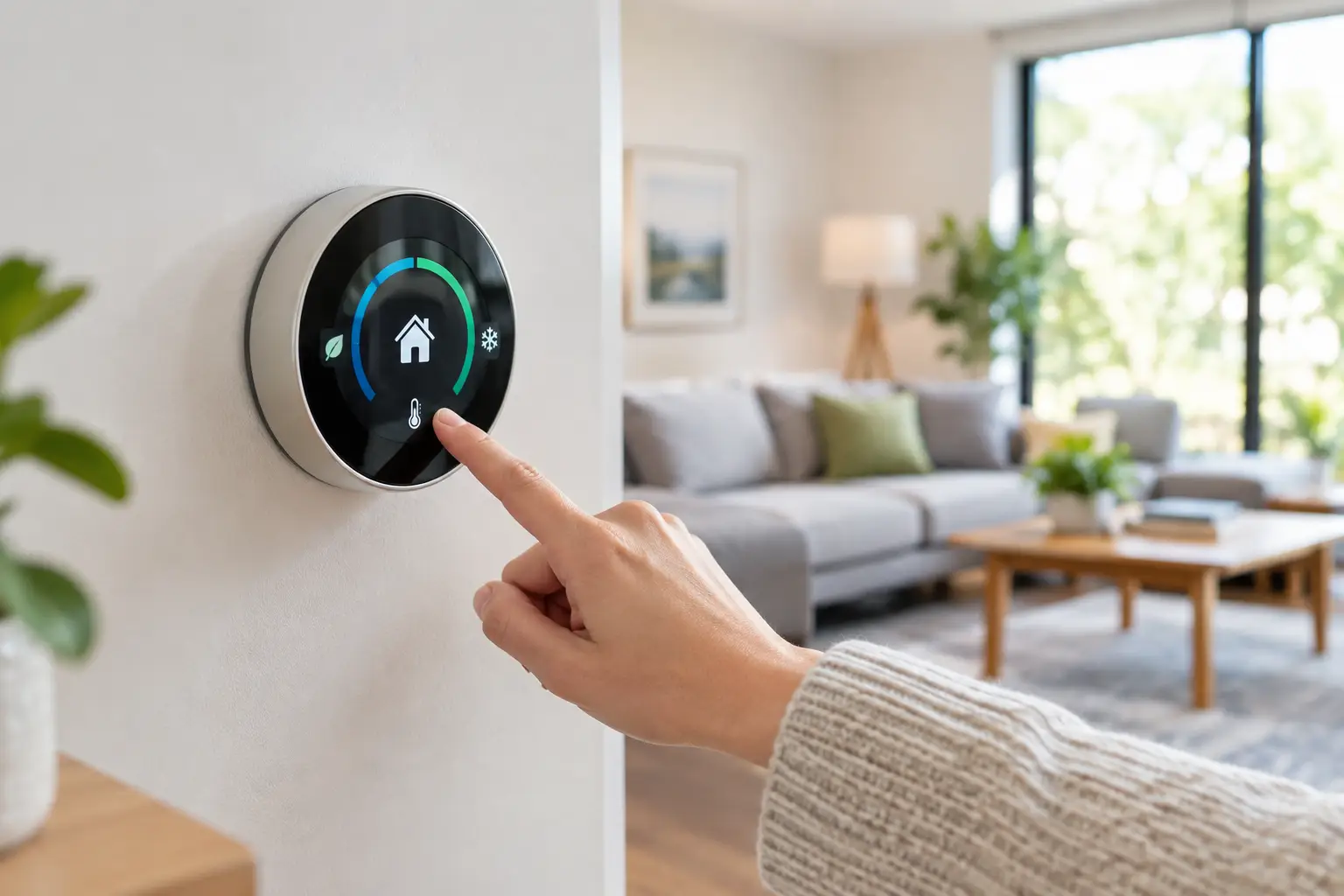
A new boiler or heat pump can only perform at its best when the controls tell it exactly what your home needs. The best heating controls for homes do not simply turn the heating on and off. They help each room reach a comfortable temperature at the right time, reduce wasted energy and make day-to-day heating easier to manage.
For many Hertfordshire households, the right answer is not one expensive gadget. It is a well-matched combination of thermostat, programmer, radiator controls and boiler or heat pump settings. The best choice depends on your system, how your household uses the property and whether different rooms need different temperatures.
Best heating controls for homes: start with the system
Before choosing a smart thermostat or adding controls room by room, consider what is providing your heating. Gas boilers and heat pumps respond differently, so a control that works well with one may not be the best fit for the other.
A modern gas combi boiler generally heats up quickly. A programmable room thermostat can reduce the temperature while everyone is out, then bring the house back up shortly before you return. This suits busy households with predictable routines and can be particularly useful if you are replacing older controls that only offer basic on and off timing.
Heat pumps work most efficiently when they run steadily at a lower flow temperature. Rather than switching the heating off for long periods and asking the system to catch up quickly, heat pump controls usually favour a more consistent indoor temperature. Weather compensation is especially useful here, as it adjusts the heating output according to outdoor conditions.
Conventional boilers with hot water cylinders need controls for both heating and hot water. A properly set programmer lets you schedule each separately, so you are not heating a cylinder unnecessarily when nobody needs hot water.
The key point is compatibility. Controls must be suitable for the appliance, wiring arrangement and heating system already in place. An experienced heating engineer can assess this before recommending an upgrade.
Smart thermostats: convenient, but not always essential
Smart thermostats are often the first option homeowners consider. They connect to an app, allowing you to change temperatures and schedules from your mobile phone. If you come home early, stay away overnight or want to warm the house before arriving back from holiday, this level of control can be genuinely useful.
Many models offer features such as geofencing, which can lower the heating when the household leaves, and learning schedules that adapt to your habits. Some can also show energy-use information, helping you spot patterns that may be increasing bills.
However, smart does not automatically mean efficient. A smart thermostat will not solve poor insulation, an oversized boiler, faulty radiator valves or an incorrectly balanced system. It also needs to be installed in the right location. A thermostat placed near a draught, in direct sunlight or close to a kitchen can receive misleading temperature readings and control the whole house poorly.
For a smaller property with a regular daily routine, a quality programmable thermostat may deliver most of the benefit at a lower cost. For households with changing schedules, a smart thermostat is often worth considering because it gives you more control without constant manual adjustment.
Choose a thermostat with clear scheduling
The most useful feature is usually a straightforward heating schedule, not a long list of app functions. Look for controls that allow different weekday and weekend settings, temporary overrides and sensible temperature adjustments. If the controls are confusing, they tend to be left on one setting all year, which defeats the purpose.
A room temperature of around 18-21°C is comfortable for many homes, although individual needs vary. Bedrooms are often kept a little cooler than living areas. The aim is to heat the home to a comfortable level, not to turn the thermostat up high in the hope that the house will warm up faster. It will not.
Thermostatic radiator valves give rooms more control
Thermostatic radiator valves, commonly called TRVs, are fitted to individual radiators. They sense the temperature around the valve and reduce the flow of hot water once the room reaches the selected setting. This means an unused spare room does not have to be heated to the same temperature as the lounge.
TRVs are one of the most practical heating upgrades for homes with several radiators. They work particularly well alongside a central room thermostat. The thermostat prevents the whole system from running when the main living area is warm enough, while TRVs allow cooler settings in bedrooms, hallways and less-used rooms.
There are limits. A standard TRV should not be fitted in the same room as the main thermostat if it could shut down that radiator before the thermostat gets an accurate reading. The radiator in the thermostat room is normally left fully open, unless your installer advises otherwise.
Smart radiator valves take this a step further by enabling room-by-room schedules through an app. They can be useful in larger homes, properties with home offices or houses where family members have very different routines. They are more costly than standard TRVs, though, and they will only work well when the heating system is in good condition and correctly balanced.
Zoned heating is valuable in larger or divided properties
Zoning divides a heating system into separate areas that can be controlled independently. For example, downstairs living areas and upstairs bedrooms may have separate thermostats and schedules. This can reduce waste when parts of the house are empty for much of the day.
It is most worthwhile where there is a clear difference in how spaces are used: a large home, a converted loft, an extension, a home office or a small commercial premises with separate working areas. It may also suit landlords managing larger properties where tenants occupy different sections.
Adding zones is not always a simple controls swap. It can require new pipework, motorised valves, wiring and changes to the system layout. In a compact two-bedroom home, the installation cost may outweigh the saving. A professional survey should establish whether zoning is a sensible investment rather than an unnecessary complication.
Weather compensation and load compensation improve efficiency
Two less visible controls can make a significant difference with modern boilers and heat pumps. Weather compensation uses an outdoor sensor to adjust the temperature of the water sent around your radiators or underfloor heating. On milder days, the system does not need to work as hard. When temperatures fall outside, it can gradually increase output to maintain comfort.
Load compensation works through the thermostat and responds to the gap between the actual room temperature and the temperature you have set. Instead of repeatedly firing at full power and stopping, a compatible boiler can modulate its output more accurately.
These controls are particularly beneficial with condensing gas boilers because lower flow temperatures can help the boiler condense more effectively. They are also well suited to heat pumps, which rely on steady, efficient operation. Not every appliance and thermostat combination supports these features, so the manufacturer compatibility should always be checked.
Do not overlook hot water controls
If you have a hot water cylinder, your heating controls should make it easy to set separate hot water times and temperatures. Heating a full cylinder all day when the household only needs hot water in the morning and evening can add unnecessary cost.
Modern cylinder controls can use temperature sensors to heat water only when required. For households with solar PV, some controls can also make better use of surplus electricity, depending on the wider system design. Safety matters too: stored hot water needs to be managed at an appropriate temperature to reduce health risks while avoiding excessive energy use.
A professional set-up matters as much as the product
The best controls can underperform if they are poorly installed or incorrectly configured. Radiator balancing, boiler flow temperature, thermostat positioning and heating schedules all affect the result. This is why a controls upgrade is a good opportunity to check the overall condition of the heating system.
At Walsh Plumbing & Heating, we look at the property, the existing system and how you use your home before recommending controls. You should understand what is being fitted, why it suits your system and what the cost includes. Clear advice at this stage prevents the frustration of paying for technology that does not deliver a noticeable improvement.
If your current heating feels uneven, costly to run or difficult to manage, start with a proper assessment rather than choosing controls based on the app alone. The right set-up should make comfort feel automatic, while giving you confidence that your heating is only working as hard as it needs to.