A heating system that comes on while the house is empty is not just frustrating – it is money spent heating rooms nobody is using. The best smart heating controls give you more say over when and where your home is heated, without making daily life more complicated. But the right choice depends on your boiler or heat pump, the size of your property and how your household uses each room.
A smart control is not automatically the answer to every heating issue. If your boiler is unreliable, radiators are cold at the bottom or the system has never been properly balanced, those faults need attention first. When the heating system is in good working order, however, better controls can make it easier to keep your home comfortable and reduce avoidable energy use.
What smart heating controls actually do
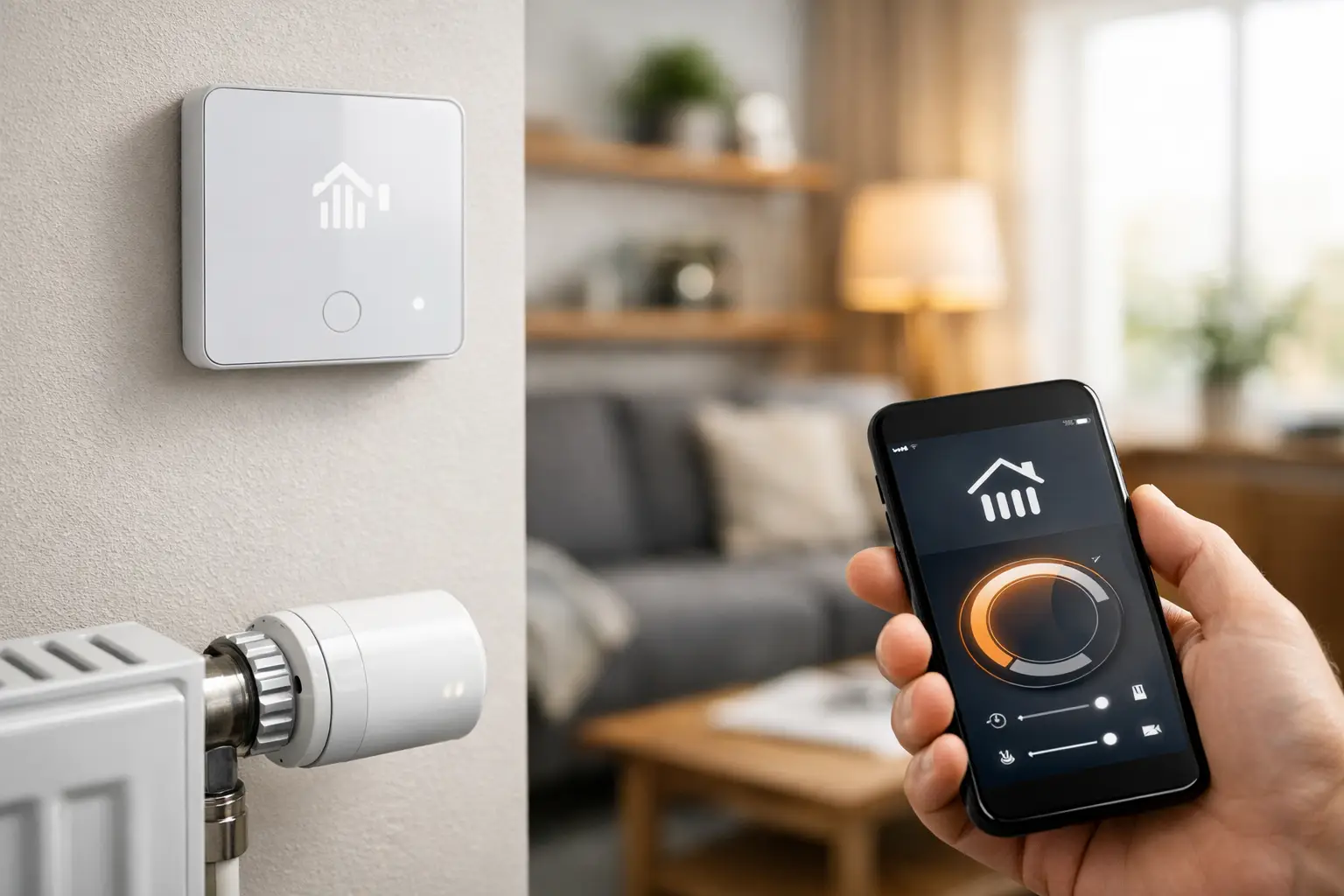
At their simplest, smart heating controls replace or improve on a traditional room thermostat and programmer. Rather than setting heating times at a fixed wall-mounted unit, you can usually manage schedules from an app, adjust the temperature remotely and see whether the heating is currently calling for heat.
That is useful when plans change. You may be working from home unexpectedly, returning early from a weekend away, or want to make sure the heating is not left running after the last person leaves. A properly configured smart thermostat lets you respond without standing in the hallway changing timers.
More advanced systems can also use features such as geofencing, which adjusts heating based on whether household members are nearby, and individual smart radiator controls. The key is to choose useful features, rather than pay for technology you will never use.
How to choose the best smart heating controls
There is no single product that is right for every Hertfordshire home. The best smart heating controls are the ones that work correctly with your existing heating system and make your routine easier. Before choosing a model, consider how your home is heated and what you want to improve.
Check boiler and heat pump compatibility first
Most smart thermostats can work with many modern gas boilers, including combi, system and conventional boilers, but the wiring and available functions vary. Some controls simply switch the boiler on and off. Others can communicate with compatible boilers to regulate the heat output more gradually.
Where a boiler supports modulation through an appropriate control connection, it may run more efficiently by delivering only the heat required instead of repeatedly firing at full output. This can be a worthwhile feature, but it is not available on every boiler and control combination. A control that is designed to work with your boiler manufacturer may offer more functions, although an independent smart thermostat can still be a sensible option.
Heat pumps need a different approach. They generally work best when maintaining a steady, lower flow temperature rather than being switched sharply on and off throughout the day. Smart controls for a heat pump should complement weather compensation and the installer’s system design. Aggressive temperature setbacks can reduce comfort and may not deliver the savings homeowners expect.
Decide whether room-by-room control is worthwhile
A single smart thermostat is often enough for a smaller home or a household that heats every room in much the same way. It gives clearer scheduling and remote access without changing every radiator valve.
For larger homes, households with different routines, or properties with spare bedrooms, smart thermostatic radiator valves can offer more control. They allow rooms to follow separate schedules: for example, a warm kitchen in the morning, a comfortable home office during the day and cooler unused bedrooms.
This approach has a trade-off. It costs more, takes longer to set up and needs occasional battery changes. It also relies on sensible settings. Heating every room to a high temperature simply because it can be controlled from a phone will not cut bills.
Choose controls that suit the people using them
The app should be straightforward, but the physical control matters too. Anyone in the home should be able to turn the temperature up or down without needing to find a phone, remember a password or work through several screens.
If the property has variable occupancy, remote access and flexible schedules can be particularly useful. Landlords may value the ability to set sensible heating periods between tenancies, while still ensuring tenants have a clear and easy way to control their own comfort. For small business premises, zoning can help avoid heating meeting rooms, offices or treatment areas outside working hours.
The main smart control options
The right category usually becomes clearer once you know how you use your heating. The most common options are:
- A smart thermostat with app control, which suits many homes looking for simpler scheduling and remote adjustments.
- A smart thermostat with a compatible modulating boiler connection, which can provide more refined boiler control where supported.
- Smart radiator valves alongside a central smart thermostat, which are best for homes that need room-by-room schedules.
- A manufacturer-specific boiler control, which can be a strong choice when fitting a new compatible boiler and you want access to its full control features.
A wireless thermostat can be easier to position in the right part of the home, away from draughts, direct sunlight and kitchen heat. However, the receiver still needs correct installation at the boiler or wiring centre. Wi-Fi coverage also matters. If the signal is weak where the hub or thermostat is located, remote features may be unreliable even though the heating itself can often continue to follow its local schedule.
Installation is about more than replacing a thermostat
Smart heating control installation can involve mains wiring, a boiler receiver, existing zone valves and programmer connections. It is not always a like-for-like swap, particularly in older properties with complicated wiring or separate heating and hot-water controls.
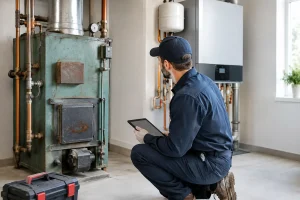
A professional installer can check whether the existing controls are correctly wired, confirm compatibility and make sure the boiler responds as it should. They can also set up the system, explain the controls and ensure the thermostat is located where it can read the room temperature accurately. A thermostat fitted in a cold hallway, near an external door or above a radiator can lead to poor heating decisions regardless of how smart the device is.
If you are replacing a boiler, it is worth discussing controls at the same time. This avoids paying for an unsuitable thermostat now and changing it again after the new boiler is installed. It also gives the installer the opportunity to commission the complete system properly, including radiator balancing and the correct boiler settings.
Avoid the common mistakes that limit savings
Smart controls help reduce wasted heating, but they cannot overcome a poorly maintained system or poor insulation. A home that loses heat quickly may still feel cold even with a sophisticated thermostat. Likewise, a boiler that is short-cycling, a pump with a fault or radiators full of sludge should be investigated rather than masked with new controls.
Avoid setting the thermostat to a very high temperature in the hope that rooms will warm up faster. The heating system generally warms at the same rate; it will simply run for longer and may overshoot the comfort level you wanted. Start with a realistic target temperature, then refine each schedule around the times your home is occupied.
It is also sensible to retain a consistent minimum temperature in winter, particularly in homes at risk of damp or frozen pipework. Smart scheduling should improve control, not leave the property unprotected during cold weather.
A clear route to the right control
For many households, the best first step is a reliable smart thermostat that is compatible with the current boiler and simple enough for everyone to use. Add smart radiator valves where specific rooms genuinely need different schedules. If you are installing a new boiler or heat pump, choose controls as part of the wider system design rather than as an afterthought.
Walsh Plumbing & Heating can assess your existing heating setup, explain the options in plain English and provide a clear quote for suitable controls or a complete boiler upgrade. The aim is straightforward: dependable warmth when you need it, less wasted heating when you do not, and no confusion over what has been installed in your home.