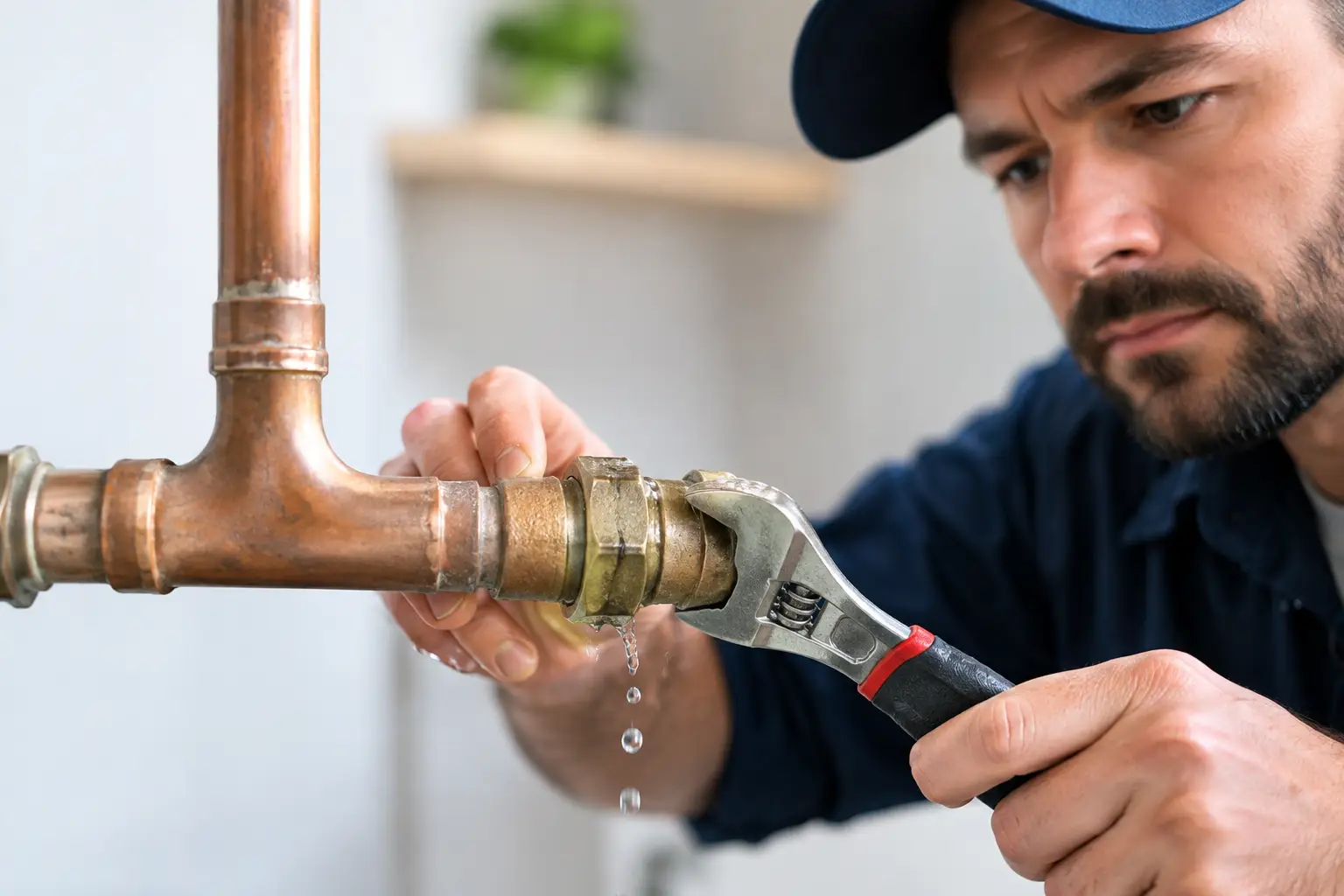
A small patch of water beneath the kitchen sink can become a damaged cupboard, warped flooring or a stained ceiling surprisingly quickly. Knowing how to stop pipe leaks in the first few minutes can protect your home, but a lasting repair depends on finding out why the pipe started leaking in the first place.
A leak may be as simple as a loose connection, or it may point to corrosion, frozen pipework, excessive system pressure or a hidden fault in your heating system. The right response is calm, practical and safe: contain the water, isolate the supply where necessary, then arrange a proper repair.
How to Stop Pipe Leaks Safely
Start by moving valuables, towels and electrical items away from the affected area. Put a bucket or washing-up bowl under the drip and use towels to prevent water spreading into cupboards, carpets or flooring.
If the leak is on a visible pipe beneath a sink, basin or toilet, look for the local isolation valve. This is usually a small valve on the pipework, often with a flat-head screw slot. Turn it a quarter turn so the slot sits across the pipe, which stops water flowing to that fitting. If you cannot identify a local valve, or water is escaping quickly, turn off the mains water supply at the stopcock.
Most homes have an internal stopcock under the kitchen sink, in a utility room, beneath the stairs or close to where the water supply enters the property. Turn it clockwise to close it. If it is stiff, do not force it hard enough to damage the fitting. It is worth checking where your stopcock is before an emergency, and testing it carefully once or twice a year.
Do not ignore electrics. If water is near sockets, appliances, light fittings or a consumer unit, avoid touching anything wet. Switch off electricity at the mains only if you can do so safely from a dry location. Where water is coming through a ceiling, keep clear of the area below it – pooled water can make ceilings unstable.
For a temporary measure on a small, accessible pipe leak, a repair clamp, self-fusing tape or epoxy repair putty may slow the leak until help arrives. These products can be useful in an emergency, but they are not a substitute for replacing damaged pipework or a failed fitting. Applying tape over a corroded pipe may hide the symptom while the pipe continues to weaken.
Identify Where the Leak Is Coming From
The location and behaviour of the water offer useful clues. A drip that occurs only when the tap is running often comes from a waste pipe joint, trap or seal. Water under pressure that continues when no tap is in use is more likely to be from a supply pipe, valve or appliance connection.
Leaks around compression joints can sometimes be caused by a nut that has worked loose. A very small adjustment may help, but overtightening can distort the olive inside the fitting and make the problem worse. If the joint remains damp after drying it thoroughly, it needs professional attention rather than repeated tightening.
Copper pipes can develop pinhole leaks as they age. You may notice a fine spray, a greenish stain around the pipe or an unexplained damp patch. Plastic pipework can split at fittings, especially if it has been poorly supported or exposed to freezing conditions. In either case, replacing the affected section is usually more reliable than patching it.
A leaking toilet may not always leave a puddle. A faulty fill valve can allow water to run continuously into the pan, while a failed seal between the cistern and toilet can leak only when flushed. Similarly, a washing machine or dishwasher hose can seep at its connection and only reveal itself during a cycle. Dry the area first, then run the appliance or fitting briefly while watching carefully for the source.
Leaks From Radiators and Heating Pipework
A radiator valve may leak from the spindle, the connection to the radiator or the pipe below it. Place a container underneath, turn off the heating if water is escaping, and avoid dismantling the valve while the system is hot or pressurised.
If you need to top up your boiler repeatedly because the pressure keeps dropping, there may be a leak somewhere on the heating system. It could be visible at a radiator or concealed below floors and behind walls. Low pressure can leave your home without reliable heating or hot water, so this is not a fault to manage with continual topping up.
Water around a boiler needs particular care. Do not remove the boiler casing or attempt internal repairs. Boilers combine water, electricity and natural gas, so diagnosis and repair should be carried out by a Gas Safe registered engineer. If you smell gas, suspect a gas leak or feel unwell, leave the property and follow the emergency guidance provided by your gas network operator.
When a Pipe Leak Needs a Plumber Straight Away
Some leaks can wait for a convenient appointment once the supply has been isolated. Others need a rapid response to prevent serious damage. Call a qualified plumber promptly if water is coming through a ceiling, a pipe has burst, the leak is close to electrics, or you cannot turn off the water supply.
You should also arrange a repair where pipework is visibly corroded, a leak keeps returning after a temporary fix, or there is unexplained damp, mould or a persistent musty smell. Hidden leaks can cause extensive damage long before water becomes visible. Landlords should act quickly too, both to protect the property and to keep essential water and heating services in good working order for tenants.
For commercial premises, even a slow leak can disrupt trading, damage stock and affect neighbouring units. Isolate the affected section if possible and document any visible damage for your records, but do not delay the repair simply because the flow appears minor.
Prevent Future Pipe Leaks
The best way to deal with pipe leaks is to reduce the conditions that cause them. In cold weather, keep the heating on at a low, consistent temperature when the property is occupied or temporarily vacant. Insulate exposed pipes in lofts, garages, outbuildings and cupboards on external walls. Pipe insulation is inexpensive, but it must fit properly and cover vulnerable sections, bends and valves.
Avoid hanging heavy items from pipework or forcing cupboards shut against pipes. Under-sink leaks are often made worse by cleaning products, bins and stored items knocking against valves or flexible hoses. Give connections enough space and check them occasionally for dampness or corrosion.
Your water pressure also matters. Very high mains pressure can put unnecessary strain on taps, appliance hoses and fittings. If you hear banging pipes, known as water hammer, or regularly see drips at valves, a plumber can assess whether pressure regulation or pipework support is needed.
Regular boiler servicing and heating maintenance can also identify small issues before they become inconvenient failures. A trained engineer can check system pressure, radiator valves, expansion vessels and visible pipework as part of a wider assessment of your heating system.
Choose a Repair That Lasts
Stopping the water is the urgent job. Solving the cause is what protects your property over the long term. A professional repair may involve replacing a short piece of pipe, renewing a valve, remaking a joint or tracing a concealed leak with the right equipment. The correct solution depends on the pipe material, its condition, accessibility and whether the leak is on mains water, waste or heating pipework.
Walsh Plumbing & Heating provides clear, professional plumbing and heating support for homeowners, landlords and local businesses across Hertfordshire and surrounding areas. You should know what work is required, why it is needed and what it will cost before repairs begin. No guesswork and no hidden costs.
If you have contained a leak, take a photo of the affected area before it dries and make a note of when it occurs – for example, when a tap runs, the heating is on or an appliance is in use. That small amount of information can help the right engineer diagnose the fault faster and get your home back to normal with less disruption.