A boiler failure rarely arrives at a convenient time. When your heating or hot water is off, the question becomes urgent: should you replace it with a gas boiler or electric boiler? The right answer depends on more than the appliance price. Your property’s heat demand, access to natural gas, hot-water use and electrical supply all matter.
For most Hertfordshire homes already connected to the gas network, a modern gas boiler remains the practical choice. Electric boilers can be a sensible solution in specific properties, particularly smaller homes without a gas connection. Here is how to weigh up the decision clearly.
Gas boiler or electric boiler: the key difference
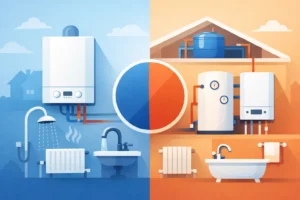
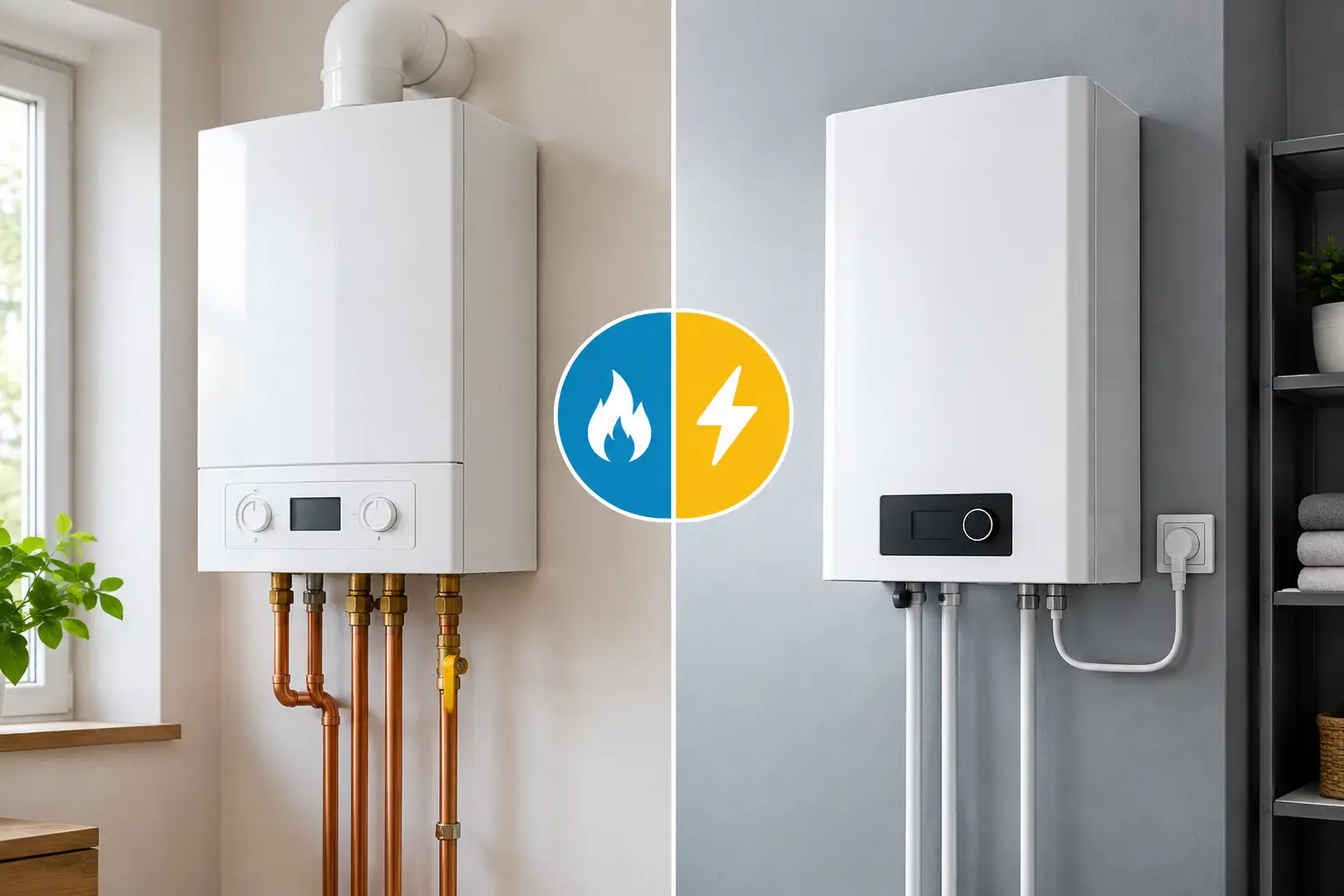
Both systems heat water for radiators, underfloor heating and, in many cases, domestic hot water. The major difference is the energy source. A gas boiler burns natural gas and safely removes combustion gases through a flue. An electric boiler converts electricity into heat, so it does not need a flue, gas pipework or a gas supply.
Electric boilers are often described as 100% efficient at the point of use. That is true in a narrow technical sense: almost all the electricity used becomes heat. However, efficiency is not the same as affordability. Electricity usually costs considerably more per unit than natural gas, which can make an electric boiler more expensive to run in a typical family home.
When a gas boiler is usually the better choice
A modern condensing gas boiler is generally the strongest all-round option for a home with an existing gas supply. It can deliver the output needed to heat several radiators while also meeting everyday hot-water demand. For households with two or more occupants, a combi boiler can provide hot water on demand without the need for a separate cylinder, subject to the incoming mains water flow being suitable.
Gas boilers also tend to offer lower running costs than direct electric heating. This difference becomes more noticeable in larger properties, poorly insulated homes and households that use plenty of hot water. A correctly sized, high-efficiency boiler with good controls can provide reliable warmth without asking your electrical supply to carry a very high load.
There are trade-offs. A gas boiler needs an appropriate flue route, annual servicing and installation by a Gas Safe registered engineer. It also produces carbon emissions at the property. For many homeowners, though, the balance of performance, hot-water convenience and running cost still makes it the sensible replacement choice.
When an electric boiler can make sense
An electric boiler may suit a small, well-insulated flat, an annexe, a holiday property or a home that cannot access the gas network. It is compact, quiet and does not require a flue. This can simplify installation where space is limited or where routing a flue would be difficult.
It can also be useful where a property’s heating demand is modest. A smaller electric boiler may work well with a hot-water cylinder and a carefully designed heating system. If electricity is generated through solar panels, or you have access to a suitable off-peak tariff, that may improve the running-cost picture at certain times of day.
The limitation is output. Heating a larger family house electrically can require a substantial supply capacity. Some higher-output electric boilers may need upgrades to the consumer unit, cabling or even the incoming electrical service. That work can add cost, disruption and lead time. An electric boiler is not automatically the low-hassle option simply because it has no flue.
Compare running costs, not just installation prices
It is tempting to focus on the upfront quote, especially when an existing boiler has broken down. Yet the purchase price is only one part of the decision. Consider what the system will cost to operate over the years ahead.
Natural gas has typically been cheaper per kilowatt-hour than electricity. As a result, even an efficient electric boiler can cost more to run than a modern gas condensing boiler producing the same amount of heat. The exact difference will depend on your tariff, how much heat your property loses, your thermostat settings and how your household uses hot water.
A good installer should assess your home rather than recommend a boiler based on brand or headline output alone. Boiler size must reflect the heat loss of the property and your hot-water requirements. Oversizing can lead to avoidable cost and less efficient operation, while undersizing leaves rooms slow to warm and hot water disappointing at busy times.
Hot water often decides the outcome
If your household regularly has showers running back-to-back, fills baths or uses hot water in several places at once, the hot-water arrangement deserves close attention. A gas combi boiler can be an excellent fit for many homes, but its performance depends on mains water pressure and flow rate.
Electric boilers are commonly paired with a cylinder, which stores hot water for use when needed. This can work well, but it requires space and careful sizing. Once the stored hot water is used, recovery can take time, especially if the electrical input is limited. An unvented cylinder may offer strong shower performance, but it must be installed and maintained by suitably qualified professionals.
For a landlord or small commercial property operator, the priority may be different. Straightforward maintenance, available plant-room space and predictable demand can make a cylinder-based system appropriate. The best choice is always specific to the building and how it is used.
Installation requirements and safety
A gas boiler replacement is often straightforward where a like-for-like system is being fitted in the same location. Moving the boiler, changing from a conventional system to a combi, or upgrading old controls can involve additional work. Flue positioning, condensate drainage, pipework condition and ventilation requirements all need proper assessment.
An electric boiler avoids gas pipework and flue installation, but it still needs professional electrical design. The installer must establish whether the existing supply can safely support the boiler alongside cookers, showers, appliances and other household loads. Do not assume that a standard domestic electrical supply will suit every electric boiler.
Whichever route you choose, quality installation protects your investment. Gas work must be completed by a Gas Safe registered engineer. Electrical work must meet the relevant standards, and the finished system should be commissioned properly, with controls explained clearly and all paperwork provided.
Do not overlook heat pumps
If you are considering an electric boiler because you want to reduce reliance on natural gas, a heat pump may also be worth discussing. A heat pump uses electricity but moves heat rather than creating it directly, so it can produce several units of heat for each unit of electricity used in the right conditions.
It is not the right answer for every property. Heat pumps need a suitable location, thoughtful system design and, in some homes, radiator or insulation improvements. They generally work best at lower flow temperatures than traditional boiler systems. Still, for homeowners planning a wider efficiency upgrade, it is a comparison worth making before committing to direct electric heating.
Questions to ask before choosing
Before accepting a quote, ask what boiler output has been recommended and why, whether your current radiators and controls are suitable, and what the expected hot-water performance will be. If you are considering electric, ask for confirmation that your electrical supply can support it without costly unexpected upgrades.
You should also ask what is included in the fixed quote: system cleansing, controls, flue work, removal of the old appliance, commissioning, warranty registration and aftercare. Clear answers now prevent unwelcome surprises later. Walsh Plumbing & Heating can survey your property and explain the practical options in plain English, with a clear quotation before work begins.
A new boiler should make daily life easier, not create another problem to manage. Choose the system that suits your property, your household’s hot-water habits and the costs you are comfortable carrying over the long term.