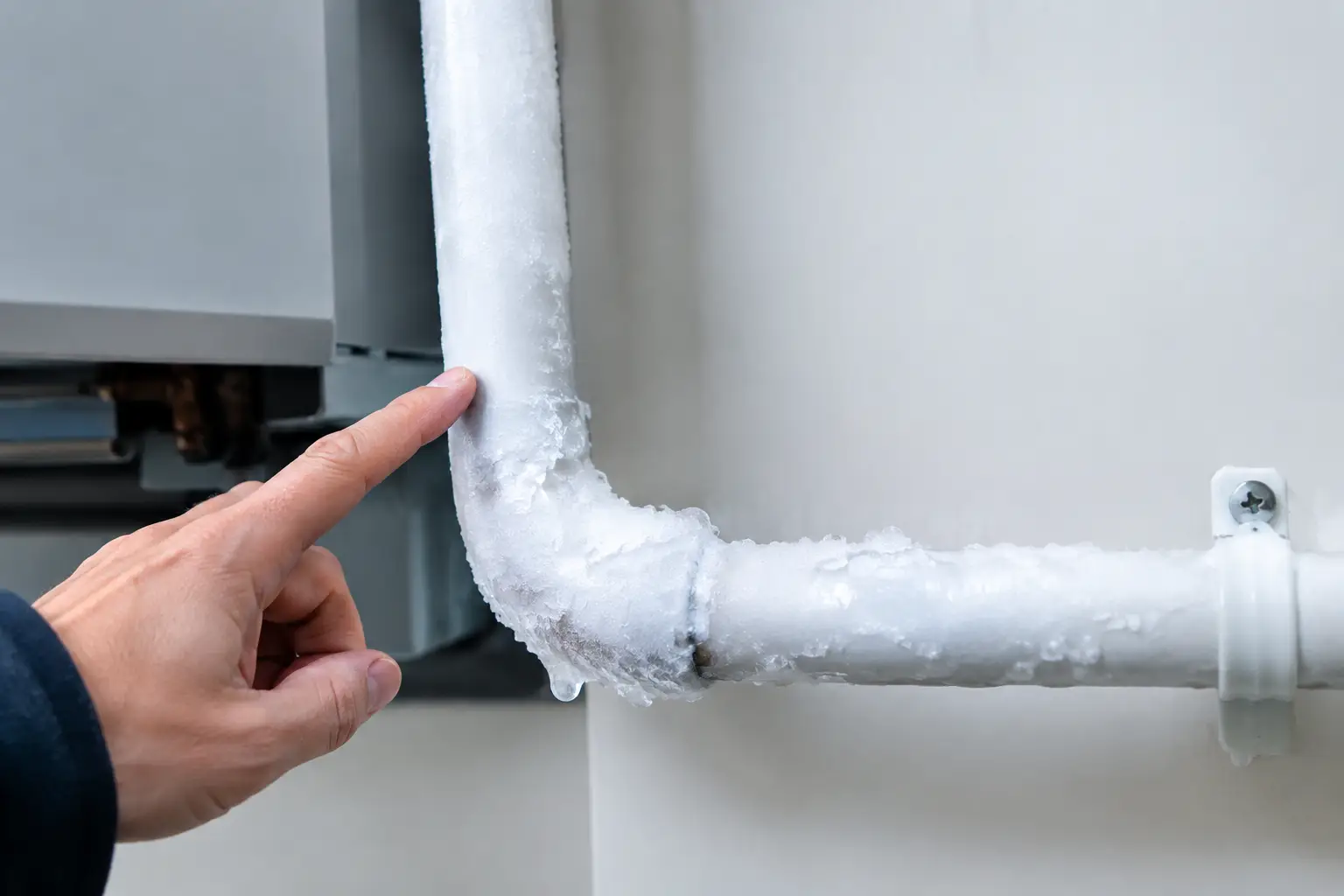
A boiler that stops on a freezing morning is often not a major breakdown. Learning how to spot a frozen condensate pipe can help you identify one of the most common cold-weather boiler faults quickly, take safe action where appropriate, and avoid spending longer without heating or hot water than necessary.
Modern condensing boilers produce acidic wastewater called condensate. This normally travels through a plastic pipe into an internal waste pipe or outside drain. When an external section is exposed to sub-zero temperatures, the water can freeze and form a blockage. The boiler then shuts down as a safety measure because the condensate has nowhere to go.
Signs of a frozen condensate pipe
The most obvious sign is a boiler that has stopped working during particularly cold weather. You may find that the heating and hot water have both gone off, even though the boiler had been working normally the day before.
Many boilers display a fault code or warning light when this happens. The exact code varies by make and model, so check your boiler manual if you have it. Some boilers may show a flashing light, while others display a message relating to ignition, flue operation, condensate or a lockout. A frozen pipe can prevent the boiler from completing its normal operating sequence, which is why the fault message is not always labelled clearly as a frozen condensate issue.
Look outside for the condensate pipe. It is usually a white or grey plastic pipe, commonly around 22mm in diameter, running from the boiler to a drain. On some homes it passes through an external wall before dropping into a gully. If there is visible frost, ice, a swollen section of pipe, or ice around the pipe outlet, freezing is a strong possibility.
You may also notice water dripping, backing up, or collecting near the external pipework. Do not confuse this with a leaking boiler. A blocked condensate route can cause water to overflow from fittings or drain slowly once the ice begins to thaw.
Where condensate pipes usually freeze
The vulnerable section is normally outside, especially where the pipe is narrow, exposed to wind, or runs horizontally. A long external run has more opportunity to freeze than a short pipe that enters an internal soil stack.
Common problem areas include pipework leading to an outside drain, bends near the wall, low points where water sits, and an outlet that has become blocked by leaves or debris. Older installations may use smaller pipework externally, which is more prone to freezing in prolonged cold spells.
Not every boiler failure in winter is caused by frozen condensate. Low boiler pressure, a frozen water supply, an electrical issue, a faulty component or a problem with the gas supply can produce similar symptoms. If temperatures are mild, there is no external condensate run, or the boiler has had intermittent faults for some time, it may be something else.
Check safely before doing anything
Start with a few simple checks. Is the boiler switched on? Is there power at the property? Does the boiler display an error code? Is the pressure gauge within the manufacturer’s recommended range, usually around 1 to 1.5 bar when the system is cold? These details will help if you need an engineer.
Then inspect the visible external condensate pipe from ground level. Do not climb ladders, remove boiler covers, take apart pipe joints or interfere with the flue. If you cannot safely reach or see the pipe, leave it to a qualified engineer.
If you smell gas, do not attempt any boiler repair or reset. Turn off the gas supply at the emergency control valve if it is safe to do so, open doors and windows, avoid electrical switches and naked flames, and follow the emergency guidance from your gas network provider. A frozen condensate pipe does not normally cause a gas smell, so treat this as a separate urgent issue.
How to thaw a frozen condensate pipe safely
If the frozen section is accessible at ground level and you are confident it is the condensate pipe, gentle warming may clear the blockage. Use warm water, not boiling water, poured slowly over the frozen section. Boiling water can crack plastic pipework, particularly when it is already very cold.
A hot water bottle or a warm, damp cloth held against the pipe can also help. Begin at the end closest to the drain and work back towards the boiler. This gives melted water somewhere to escape rather than trapping it behind the blockage.
Keep the area clear and take care of slippery surfaces. Meltwater can quickly freeze again on paths, patios or steps. Once the pipe has thawed, follow your boiler manufacturer’s instructions to reset the boiler. A single reset is usually enough. If it does not restart, do not keep repeatedly resetting it – the fault may not be related to the condensate pipe.
Never use a naked flame, blowtorch, heat gun or sharp tool to remove ice. These methods can damage the pipe, create a fire risk or leave you with a leak. They are not a safe shortcut.
When to call a heating engineer
Call a qualified, Gas Safe registered heating engineer if the pipe is inaccessible, the boiler will not reset after thawing, water is leaking from the boiler, or you are unsure what you are looking at. It is also sensible to arrange a visit if the same problem happens more than once each winter.
An engineer can confirm whether the condensate pipe is the cause, clear the blockage safely and check that the boiler is operating correctly. If the external pipework is poorly routed, undersized or lacks adequate protection, they can advise on a more reliable long-term arrangement.
For landlords and small business premises, it is particularly important not to leave an unreliable boiler issue unresolved. Repeated outages can affect tenants, staff and customers, while persistent freezing can eventually damage pipework or expose an underlying installation issue.
Preventing the problem next winter
A pipe that has frozen once may not necessarily freeze again, but it is worth addressing the conditions that allowed it to happen. The best solution depends on the property layout. In some cases, rerouting the condensate pipe internally is possible. In others, increasing the external pipe diameter, improving the fall towards the drain or fitting suitable insulation can reduce the risk.
Insulation alone is not a guarantee during extended sub-zero weather. It helps slow heat loss, but a long, narrow pipe in an exposed location can still freeze. This is why good pipe routing and correct installation matter as much as lagging.
Keep gullies and drain outlets clear of leaves, soil and garden debris, particularly before winter. A partially blocked drain can allow water to sit in the pipe and freeze more easily. During a cold spell, using the heating regularly can also help maintain flow through the system, although it will not overcome a poorly designed external run in severe conditions.
A routine boiler service is a good opportunity to ask about the condensate route. The engineer can inspect accessible pipework, look for poor falls or vulnerable joints, and explain whether improvements would be worthwhile for your home.
A quick fault is still worth taking seriously
A frozen condensate pipe is often straightforward to resolve, but it should not be dismissed simply because the boiler starts again after a thaw. Repeated lockouts are disruptive, and they usually point to pipework that needs attention before the next cold snap.
If you are in Hertfordshire or the surrounding area and your boiler will not restart, Walsh Plumbing & Heating can assess the fault, explain the options clearly and carry out the work properly. The aim is not just to restore your heating today, but to help you avoid the same cold-weather problem tomorrow.