A cold Hertfordshire morning is the real test of any heating system. Air source heat pumps are designed to keep homes comfortable through winter while using electricity to move heat from the outdoor air into your radiators, underfloor heating and hot water cylinder. For many households, they are a sensible route away from a traditional natural gas boiler. For others, preparation is needed before installation makes financial and practical sense.
The right decision comes down to your property, your existing heating system, your hot water needs and how you use your home. A proper survey should make those answers clear before you commit.
How air source heat pumps work
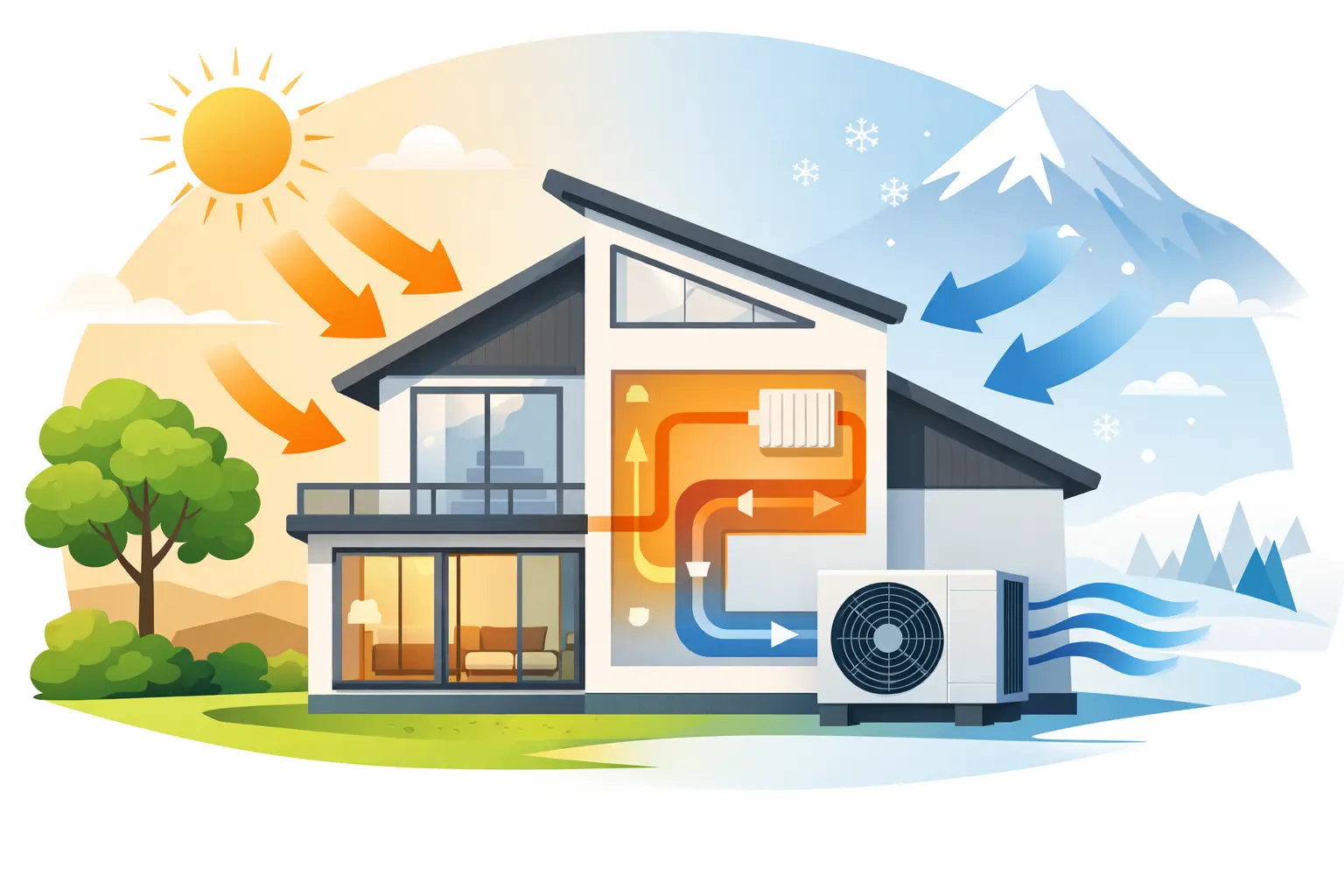
An air source heat pump sits outside your home, usually beside an external wall or in the garden. Even when the air feels cold, it contains usable heat. The unit captures that energy and raises it to a temperature that can warm water for your heating system.
That warm water then circulates around radiators or underfloor heating, much like a boiler system. Most installations also include a hot water cylinder, because a heat pump generally heats water more gradually than a combi boiler. It is a different way of heating a home, but it should not mean a cold one.
The key difference is efficiency. Instead of creating all the heat by burning fuel, a heat pump uses electricity to transfer heat. Under the right conditions, it can deliver several units of heat for every unit of electricity it uses. Its real-world performance, however, depends heavily on correct design and installation.
Is your home suitable for an air source heat pump?
Heat pumps can work in older homes as well as new builds. You do not need a newly built, perfectly insulated property to consider one. However, heat loss must be understood and managed first.
A home with poor loft insulation, draughty windows or uninsulated walls loses warmth quickly. Any heating system has to work harder in that situation, but the effect can be more noticeable with a heat pump because it usually runs at lower water temperatures than a conventional boiler. Addressing straightforward insulation and draught issues can improve comfort and reduce the size of heat pump required.
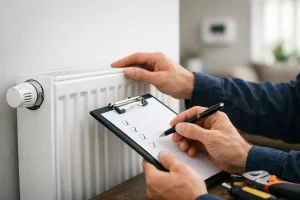
Your radiators matter too. Lower flow temperatures often mean some rooms need larger radiators, additional radiators or underfloor heating to provide the same warmth. This is not automatically a major disruption, but it should be identified at survey stage rather than discovered after installation.
A thorough assessment should consider room-by-room heat loss, radiator output, hot water demand, available space for the outdoor unit and cylinder, electrical supply, pipework condition and condensate drainage. It should also account for noise, location and access. The outdoor unit needs clear airflow and must be positioned thoughtfully for your household and neighbours.
What comfort feels like with a heat pump
A natural gas boiler often heats radiators quickly at a high temperature, particularly when the heating has been off for several hours. A heat pump is usually designed to run more steadily for longer periods, maintaining a consistent indoor temperature rather than delivering short, intense bursts of heat.
Some homeowners find this more comfortable because rooms stay more even throughout the day. It does require a small change in expectations. Turning the system down dramatically overnight and expecting instant recovery in the morning may not be the most efficient approach. Smart controls and well-set schedules make a significant difference.
Hot water also needs planning. A cylinder stores hot water ready for use, and the system can be scheduled around your household routine. For a busy family with several showers, bath times and kitchen use, cylinder size and recovery time should be carefully calculated. There is no one-size-fits-all answer.
Costs, running costs and financial support
The installed cost of an air source heat pump varies according to the property and the work required. A straightforward installation is very different from one needing radiator upgrades, a new cylinder, pipework alterations, electrical work or insulation improvements. A fixed written quotation should explain exactly what is included, so you can compare like for like and avoid unwelcome surprises.
Running costs are equally individual. Electricity prices, the insulation level of your property, the efficiency of the system, thermostat settings and your hot water use all affect the result. It is not responsible to promise a universal saving. A well-designed system in a suitable home can be an efficient long-term heating solution, while a poorly specified one may disappoint.
Government support may be available for eligible properties through schemes such as the Boiler Upgrade Scheme. Rules, grant values and eligibility requirements can change, so this should be checked as part of your quotation process. An experienced installer can help you understand the current position and the paperwork involved.
It is also worth looking beyond the purchase price. A heat pump is a long-term home investment, and finance options can help spread the cost where appropriate. The most useful comparison is not simply heat pump versus boiler on day one. It is the total cost, comfort, efficiency and expected service life over the years ahead.
Air source heat pumps versus natural gas boilers
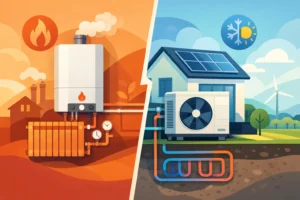
For homeowners replacing a failed boiler, speed often matters. A modern natural gas boiler can be the practical choice where a home needs urgent heating and hot water, where space is limited or where substantial upgrades are not currently affordable. It remains a familiar and effective solution for many properties.
A heat pump may be the better fit if you are planning a wider home improvement project, replacing a system before it fails, improving insulation or reducing reliance on natural gas. It can also suit households that value steady, lower-temperature heating and have space for a cylinder and outdoor unit.
The decision is not a test of whether one technology is good and the other is bad. It is about choosing a system that matches your home and budget. A reputable heating engineer should be comfortable explaining both options, including the limitations of each.
Installation should start with a detailed survey
The quality of the installation has a direct effect on performance, reliability and running costs. The outdoor unit may be the most visible part, but the pipework, controls, radiators, hot water cylinder and commissioning work are just as important.
Before work begins, you should understand the proposed system design, expected changes inside your home, the likely programme of work and what access will be needed. Ask who will carry out the installation, how your home will be protected during the work and what support is available once the system is running.
At Walsh Plumbing & Heating, we believe a heating upgrade should feel manageable, not confusing. Clear advice, a properly scoped survey and transparent pricing give you the information needed to decide with confidence. You pay what you are quoted, with no hidden costs added because essential work was overlooked.
Maintenance and long-term reliability
Air source heat pumps need routine care, although maintenance is generally straightforward. Keeping the outdoor unit clear of leaves, garden waste and restricted airflow is useful, particularly after autumn and winter weather. The system should also be professionally serviced in line with the manufacturer’s guidance.
A service visit can check operating pressures, controls, filters, electrical connections, system water quality and overall performance. It is the best opportunity to spot small issues before they affect comfort or lead to a breakdown. Keep records of servicing and installation documents, particularly if your system is covered by a manufacturer guarantee.
If you are considering air source heat pumps, do not start with a brochure or a headline saving. Start with your home. A professional survey can show what is possible, what needs improving and whether a heat pump will give you the reliable warmth and hot water you expect for years to come.