A puddle beneath your boiler is never something to ignore. Can a leaking boiler be repaired? In many cases, yes – particularly when the source is a worn seal, loose connection or faulty valve. But a leak can also point to corrosion inside an older boiler, and that can make replacement the safer, more cost-effective decision.
The key is finding where the water is coming from before it damages the boiler, surrounding pipework, flooring or electrics. A qualified heating engineer can identify the fault safely, explain the options in plain English and provide a clear price before work begins.
First, make the boiler safe
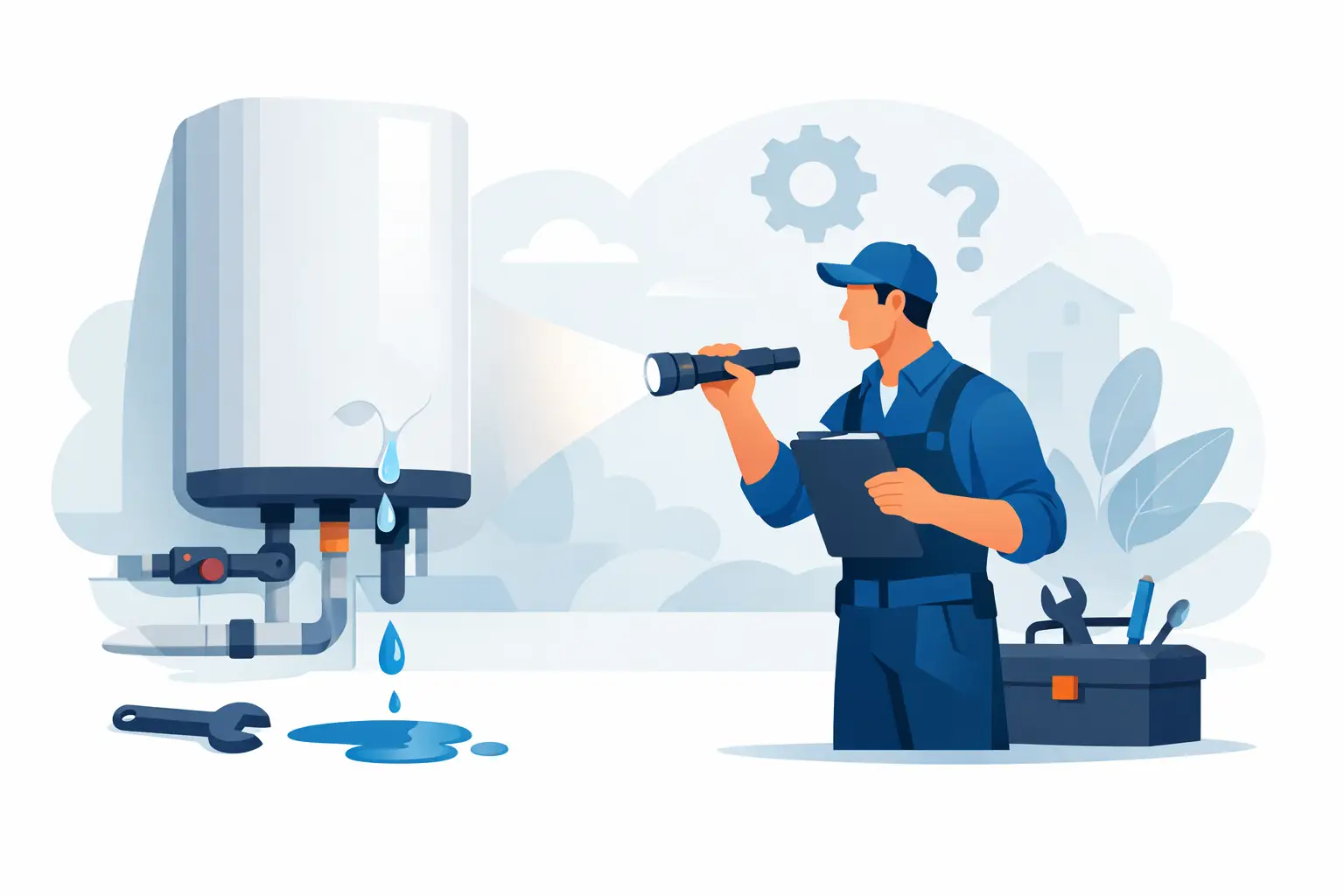
If water is actively dripping or pooling around the boiler, switch the boiler off at its electrical isolation switch if it is safe to do so. Do not touch switches, wiring or the boiler casing if water is near them. Place a towel or container beneath a small drip only if you can do so without moving pipes or panels.
Avoid repeatedly topping up the system to maintain pressure. It can mask the fault and, if the leak is significant, introduce fresh oxygen into the heating system, which can contribute to further corrosion. Do not remove the boiler cover or attempt to tighten internal components yourself.
If you can smell gas, hear a hissing sound, feel unwell, or suspect a gas-related issue, treat it as an emergency. Turn off the gas supply at the meter only if you know how, open doors and windows, avoid electrical switches and naked flames, leave the property, then contact the appropriate emergency service. A water leak and a gas issue are different problems, but both require proper attention.
What causes a boiler to leak?
Not every apparent boiler leak starts inside the boiler. Condensation pipework, a nearby radiator valve, a pressure relief pipe or pipework above the appliance can all allow water to run down and collect underneath it. This is why a professional inspection matters.
Common causes include a failed pressure relief valve, a worn pump seal, a leaking heat exchanger, corroded internal components or a loose connection. Condensing boilers also produce water as part of normal operation, which should flow safely away through the condensate pipe. A blocked, cracked or poorly connected condensate pipe may be the source of the problem, especially during colder weather.
High system pressure is another frequent clue. Most sealed central-heating systems sit around 1 to 1.5 bar when cold, although the correct reading depends on the particular boiler and system. If the pressure rises sharply when the heating is on and water discharges through the external copper pipe, the expansion vessel or pressure relief valve may need attention.
Can a leaking boiler be repaired when the pressure is high?
Often, yes. A failed expansion vessel, pressure relief valve or filling loop issue can usually be repaired when diagnosed early. The engineer will check the system pressure, inspect the discharge pipe, test the relevant components and look for signs that the system has been overfilled.
It is tempting to simply bleed a radiator or release water to bring the pressure down. That may provide short-term relief, but it does not establish why the pressure climbed in the first place. If it happens again, book an inspection rather than continually adjusting the system yourself.
The repair becomes more uncertain when high pressure has been ongoing for a long time. Repeated stress can expose weaknesses in valves, joints and ageing components. A good engineer will tell you whether a targeted repair is likely to last or whether the boiler is beginning to need regular, costly intervention.
When a repair is the sensible choice
A repair is usually worthwhile when the boiler is relatively modern, has been serviced regularly and the leak is confined to a replaceable part. For example, replacing a valve, seal, pump component or section of external condensate pipe can restore reliable operation without the expense of a new boiler.
Availability of parts matters too. Established boiler manufacturers generally support models with spare parts for a period, but older or discontinued appliances can become harder and more expensive to repair. The engineer should be upfront about the part required, the expected cost and whether there are signs of any wider issue.
A straightforward repair can be particularly sensible for a landlord or homeowner whose boiler is within its manufacturer guarantee. Check the guarantee terms before authorising work, as using an appropriately qualified engineer and maintaining an annual service record may be required.
When replacement may be better value
A leaking heat exchanger is often the point at which a repair needs careful consideration. The heat exchanger is a major internal component, and replacement can be expensive. On an older boiler, especially one with a history of breakdowns, it may be more sensible to put that money towards a dependable new installation with a long guarantee.
Replacement may also be recommended if there is significant corrosion, recurring leaks, obsolete parts or poor efficiency. An old boiler can sometimes be repaired, but the question is not only whether it will run again. It is whether you can rely on it through the next winter without facing another urgent call-out.
A replacement boiler brings more than a reset on reliability. Correct sizing, improved controls, system cleaning and proper commissioning can improve comfort and help reduce wasted energy. For households facing an unexpected failure, a fixed quote and available finance options can make the decision easier to manage. You pay what you are quoted, with no hidden costs.
What an engineer will check
A thorough boiler leak investigation should not be a quick glance at the casing. The engineer will trace the water source, inspect visible pipework and connections, check pressure behaviour, assess the condensate route and look for corrosion or staining around internal components.
They may also check whether the central-heating system has sludge or poor water quality. Dirty system water can accelerate wear in pumps, valves and heat exchangers. Where appropriate, cleaning and protecting the system may be recommended alongside the repair. This addresses the cause, rather than simply replacing the part that has failed.
For gas boilers, work on the appliance must be carried out by a Gas Safe registered engineer. This is about safety as well as workmanship. Boiler covers and combustion components should only be handled by someone qualified to test the appliance properly once the repair is complete.
Signs you should call sooner rather than later
A small drip can become a larger failure with little warning, particularly once the heating is working hard. Arrange a professional inspection promptly if you notice any of the following:
- Water beneath or inside the boiler casing
- Boiler pressure regularly dropping or rising
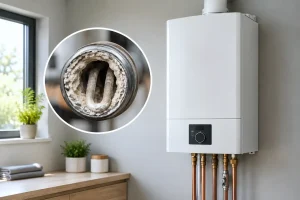
- Brown, green or white staining around valves and pipes
- A boiler that locks out, loses hot water or makes unusual noises
- Water coming from the pressure relief pipe outside
If the leak is heavy, water is reaching electrics, or heating and hot water have stopped, treat it as urgent. Acting quickly can reduce the risk of property damage and may keep a repair viable.
How to avoid future boiler leaks
Annual servicing is the most practical way to spot early wear before it becomes a breakdown. During a service, an engineer can inspect key safety and performance components, identify pressure concerns and advise on the condition of the system.
It also helps to keep an eye on the pressure gauge between services, especially after radiators have been bled or work has been carried out on the heating. If you need to repressurise the system frequently, do not assume that is normal. It often indicates a leak somewhere in the system.
Good installation standards matter as much as servicing. A correctly sized boiler, clean system water, suitable controls and properly installed condensate drainage all support a longer working life. Walsh Plumbing & Heating can assess whether a focused repair is the right answer or provide a clear, no-obligation quotation if replacement offers better long-term value.
A leaking boiler is stressful, but it does not automatically mean a new boiler is needed. Get the source checked early, ask for the repair and replacement options in writing, and choose the route that gives your property dependable heating rather than a temporary fix.