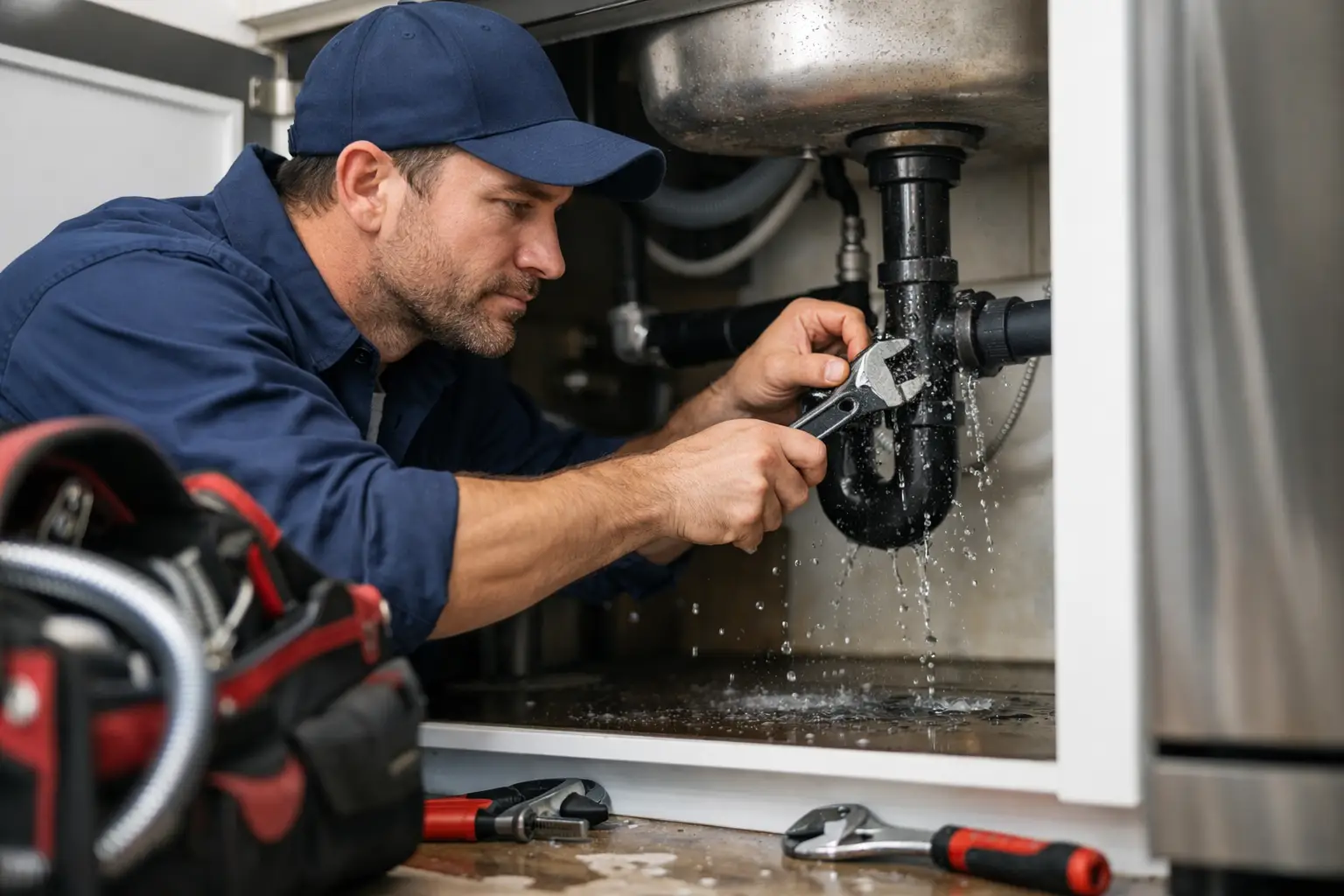
A dripping pipe under the sink is inconvenient. Water coming through a ceiling, pooling around a boiler or spreading across a kitchen floor is different. When damage is actively worsening, an emergency plumber for leak repair can protect your property, help prevent expensive follow-on work and get your water system safely back under control.
The first priority is never to diagnose every detail yourself. It is to stop or reduce the flow of water, keep people safe and call a qualified local engineer when the situation cannot wait.
What to do when you discover a leak
If water is escaping quickly, turn off the internal stopcock if you can do so safely. It is commonly located beneath the kitchen sink, in a utility room, under the stairs or close to where the water supply enters the property. Turning it clockwise should stop the mains water supply. If you live in a flat and cannot find it, check with your managing agent or building manager.
Then switch off electricity at the consumer unit if water is close to sockets, light fittings, appliances or wiring. Do not touch electrical items while standing in water. Move valuables and soft furnishings away from the affected area where possible, and place towels or containers below a smaller, contained leak.
Take a few clear photographs before drying the area. This can be useful for your insurer, landlord or managing agent. It also gives your plumbing engineer a better picture of how the leak developed if the water has slowed or stopped before they arrive.
If you can smell gas, hear hissing near a gas appliance or suspect a gas leak, do not try to investigate it. Leave the property, avoid operating electrical switches or naked flames, and call the National Gas Emergency Service on 0800 111 999.
When you need an emergency plumber for leak repair
Not every leak needs an immediate call-out, but waiting can be a costly gamble when water is still flowing or has reached vulnerable parts of the building. A rapid response is usually the right choice when a pipe has burst, a ceiling is bulging, water is escaping from a boiler, or a leak has caused loss of water to the whole property.
Leaks around toilets, baths and showers can also become urgent when they affect the floor below. A small gap in sealant may be manageable until normal working hours, but water travelling through a ceiling, wall or floor is not something to ignore. The visible damp patch is often only part of the problem.
For landlords and small business owners, speed matters for another reason: a leak can quickly make a property unsuitable for occupants, damage stock or disrupt trading. Acting early reduces disruption and gives you a clearer record of what was found and repaired.
A slow drip from an accessible trap or radiator valve may not require an out-of-hours visit if it can be contained safely. Even then, it should be booked in promptly. Persistent moisture can rot timber, damage cabinets, encourage mould and turn a straightforward repair into a larger job.
Where household leaks commonly start
The source is not always where the water appears. Water follows pipes, joists and uneven surfaces, so a stain in the dining room ceiling may be caused by a bathroom fitting several metres away.
Common causes include failed tap cartridges, worn washers, cracked waste pipes, loose compression fittings, leaking radiator valves and failed seals around baths or shower trays. In colder weather, frozen pipework can split as ice expands, with the damage becoming obvious only after the pipe thaws.
Boiler leaks need careful assessment. A small amount of water from a condensate pipe may be normal, depending on the installation. Water from beneath the boiler casing, a pressure relief pipe or connected heating pipework is not something to dismiss. The cause could be a worn seal, corroded component, faulty pressure relief valve or an issue within the heating system. Gas boiler work must be carried out by a Gas Safe registered engineer.
Why a quick repair protects more than pipework
Water damage rarely stays in one place. It can soak insulation, lift flooring, stain plaster, swell kitchen units and weaken ceilings. In some cases, it can affect wiring or create conditions where mould develops after the initial repair is complete.
The cost is not only the plumbing repair. Delaying action may mean paying for drying equipment, redecoration, joinery work or replacement flooring. That is why the right response is usually to contain the water first and arrange professional help before the problem spreads.
A qualified engineer should do more than tighten the nearest fitting. They should identify the true source, repair or replace the affected component, check nearby connections and advise whether there is any risk of recurrence. If a pipe has failed because of age, corrosion or freezing, a durable repair matters more than a temporary patch.
What to expect from a professional leak repair visit
A dependable emergency visit starts with clear communication. You should be able to explain what has happened, where the water is appearing and whether you have isolated the supply. From there, the engineer can advise on immediate safety steps and arrive prepared for the likely fault.
On site, the first task is normally to make the area safe and stop the leak. The engineer may isolate part of the system, drain a section of pipework or temporarily cap a damaged pipe before carrying out the permanent repair. This approach can be particularly useful where materials need to be sourced or where access is restricted.
Once the repair is complete, the system should be tested. For plumbing leaks, that means checking for further drips under normal pressure and ensuring taps, toilets or heating components operate correctly. For heating repairs, it may also involve checking system pressure and confirming the boiler is running safely.
At Walsh Plumbing & Heating, we believe homeowners should understand what has been found, what work is required and what it will cost before work goes ahead wherever practical. You pay what we quote. No hidden costs. Clear advice is especially valuable in an emergency, when it is easy to feel pressured into decisions you do not fully understand.
Avoid these common leak-repair mistakes
It is tempting to use tape, sealant or a quick-fix compound and hope the problem disappears. These products may help contain a minor issue briefly, but they are rarely a dependable answer for a split pipe, failed fitting or leaking boiler component. A repair that holds for a few hours can still fail overnight.
Do not remove a boiler case, interfere with gas connections or attempt repairs on pressurised heating components. Apart from the safety risk, this can make the original fault harder to diagnose and may affect manufacturer warranties.
It is also worth avoiding the urge to turn the water supply back on repeatedly to “see if it is better”. If the fault has not been repaired, every test can release more water into the property. Let the engineer assess the system and restore it safely.
Reducing the chance of another leak
Some leaks are unpredictable, but routine care can lower the risk. Have your boiler serviced annually, watch for changes in boiler pressure, deal with dripping taps and loose fittings early, and make sure exposed pipework in cold areas is properly insulated.
Every adult in the household should know where the stopcock is and how to use it. Test that it turns occasionally, as stopcocks that are left untouched for years can seize when you need them most. For rental properties and commercial premises, make sure tenants or staff know who to call and where the isolation valves are located.
If you have had a leak in a concealed area, keep an eye on the surrounding surfaces after the repair. Drying can take time, and lingering damp, staining or a musty smell may mean further investigation is needed.
When water is escaping, a calm first response can make a significant difference. Isolate the supply if it is safe, protect the property where you can and arrange qualified help promptly. The right repair should give you more than a dry floor today – it should give you confidence that the system is safe for tomorrow.