A cold radiator upstairs, brown water from a radiator bleed valve and a boiler that seems to work harder than it should can all point to sludge in the system. Naturally, the first question is usually about power flushing cost. For most homes, a professional power flush is a planned investment in heating performance, but the right price depends on the size, condition and layout of your system.
A proper quotation should be clear about what is included, what the engineer has found, and whether power flushing is genuinely the right remedy. You should not be pushed into a flush simply because the heating is underperforming.
Typical power flushing cost in the UK
For a typical domestic central heating system, power flushing commonly costs around £350 to £800. Smaller systems with a modest number of radiators may sit towards the lower end, while larger properties, heavily contaminated systems and more complex pipework can cost more.
This is a guide rather than a fixed tariff. A two-bedroom flat with six radiators is very different from a detached home with 15 radiators, multiple heating zones or difficult access. The boiler type, the age of the system and whether individual radiators need extra attention also affect the time involved.
The lowest quote is not always the best value. A rushed flush that does not properly clean each radiator, check flow, or protect the system afterwards can leave the underlying issue unresolved. A professional job takes time because the engineer needs to assess the system, circulate cleaning chemicals safely, dislodge debris, flush it through and confirm the heating is working properly.
What is included in a professional power flush?
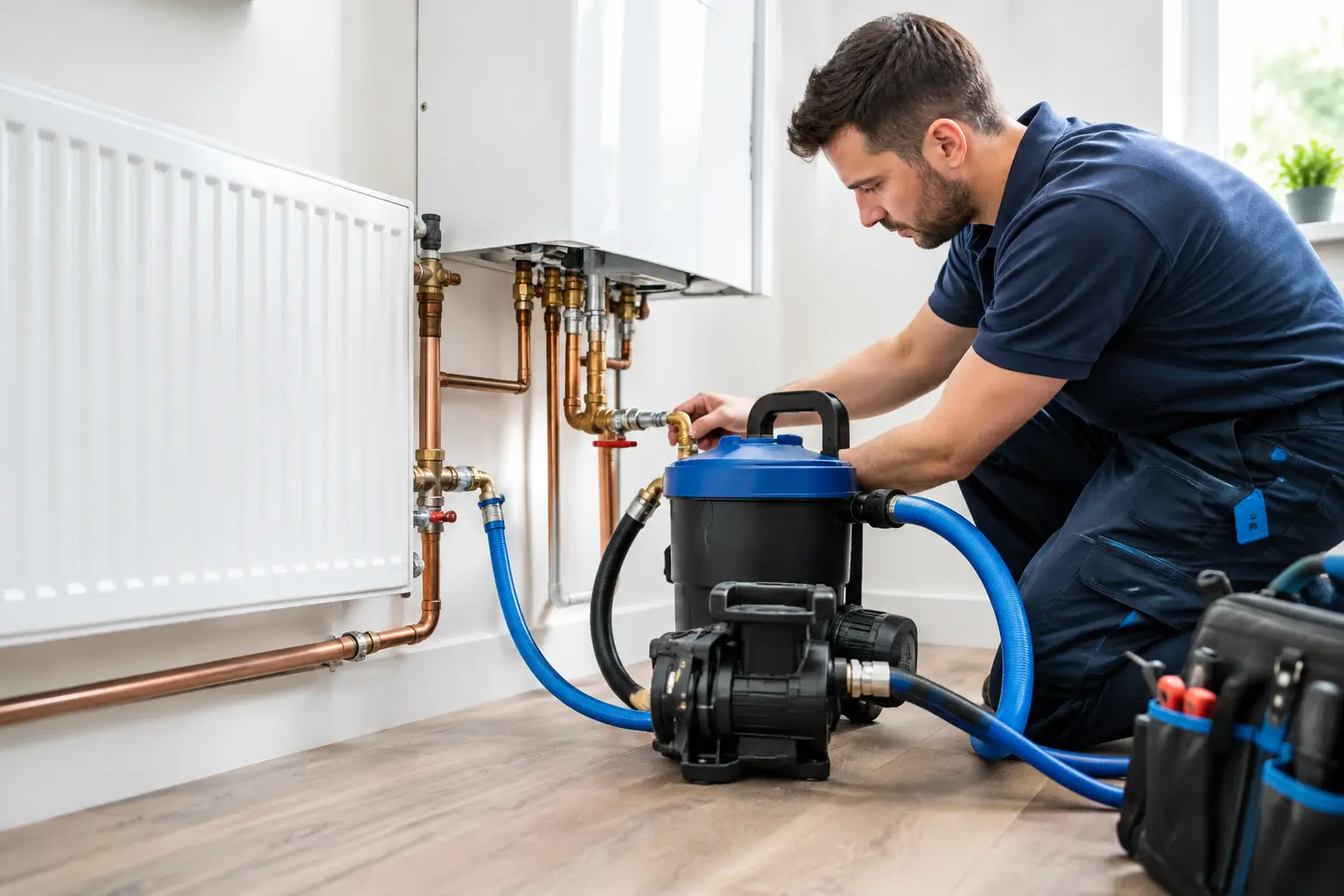
Power flushing uses a specialist pump to circulate water and cleaner around the central heating system at a higher flow rate than normal operation. The aim is to remove sludge, rust particles and other debris that restrict circulation and collect in radiators, pipework and boiler components.
A thorough service normally begins with an assessment of radiator heat-up, system water condition and visible signs of corrosion. The engineer will then connect the flushing machine, add an appropriate cleaning chemical and work through the system. Individual radiators may be isolated and agitated to shift stubborn deposits, particularly where the bottom of a radiator stays cold.
Once the system is clean, it should be thoroughly rinsed until the water runs clear. The engineer then refills, bleeds and balances the system as needed. In many cases, adding a corrosion inhibitor afterwards is essential. This helps slow future internal corrosion and protects the boiler and radiators over the long term.
Ask your engineer whether inhibitor, chemical cleaner, radiator balancing and a magnetic filter check are included in the quoted price. These details make it much easier to compare like for like.
Why do prices vary?
The number of radiators is one of the main factors. More radiators generally mean more water volume, more possible sludge and more time needed to clean and test the system. Larger homes may also have more than one heating circuit or controls that need careful checking afterwards.
System condition matters just as much. A heating system that has never been treated with inhibitor may contain significant black magnetite sludge. If a radiator is completely blocked, it may need removing for separate cleaning or replacing altogether. A power flush can remove debris from a sound system, but it cannot repair a rusted-through radiator, failing valve or damaged pipework.
Access can also affect the quote. Radiators behind fixed furniture, awkward boiler locations and systems with old or non-standard components may take longer to work on safely. If the engineer finds a leak during the visit, that repair is usually separate work rather than something to hide within the original price.
Is power flushing always necessary?
No. It is useful in the right circumstances, but it is not a cure-all. A single cold radiator may be caused by trapped air, a stuck thermostatic valve or poor balancing. A boiler fault could be electrical, mechanical or related to low pressure rather than sludge. In those cases, power flushing may add expense without solving the problem.
It is often worth considering when several radiators have cold spots, boiler noise is persistent, the system repeatedly needs bleeding, heating takes a long time to warm up or dirty water is present when radiators are drained. It may also be recommended before fitting a new boiler to an older heating system. Manufacturers expect the existing system to be clean enough to protect the new appliance, particularly its heat exchanger.
A heating engineer should explain the evidence behind their recommendation. If your system has a fault, diagnosis comes first. That is how you avoid paying for work that does not address the cause.
Power flushing before a new boiler
Installing a new boiler onto dirty pipework can create avoidable problems. Sludge left in the system can circulate into the new boiler, reduce efficiency and cause blockages or component wear. Cleaning the system before or during installation is often sensible, especially where radiators are old or the water quality is poor.
That does not mean every boiler replacement needs a full power flush. Sometimes a chemical clean and thorough rinse is suitable; sometimes the system is already clean and well maintained. The decision should follow an inspection, not a blanket rule.
For homeowners replacing an unreliable boiler, this is worth discussing at quotation stage. It allows the engineer to price the work properly and ensures there are no surprises once installation is under way. Walsh Plumbing & Heating will explain the condition of the existing system and the appropriate cleaning method before work begins.
Can a power flush reduce energy bills?
A clean system can improve circulation, helping radiators heat more evenly and allowing the boiler to operate under better conditions. If rooms reach their target temperature more easily, you may avoid running the heating for longer than necessary.
However, no reputable engineer should promise a specific saving. Your bills are also affected by insulation, thermostat settings, boiler efficiency, hot water use and energy prices. The more immediate benefit is often comfort: radiators warm up properly, cold rooms become easier to heat and the boiler is less likely to be strained by restricted circulation.
How to get a fair quote
Before accepting a price, tell the engineer how many radiators you have, whether any are cold, the age of the boiler and whether you have noticed leaks, noise or discoloured water. Photos of the boiler and radiator valves can also help when arranging an initial visit.
A clear quote should state whether it covers the cleaner and inhibitor, the number of radiators included, system testing and any follow-up recommendations. It should also explain what happens if a pre-existing leak or failed component is discovered. Transparent pricing means knowing the likely cost before the work starts, not being presented with unexpected extras after the system has been drained.
Be cautious of anyone who guarantees that a flush will fix every heating issue without inspecting the system. Equally, do not ignore ongoing boiler noise or cold radiators because they can be early warning signs of circulation problems.
Looking after the system afterwards
Power flushing is most effective when followed by sensible maintenance. Keep inhibitor at the correct concentration, have the boiler serviced annually, and ask for the magnetic filter to be checked and cleaned where one is fitted. These simple measures help capture debris before it reaches sensitive boiler parts.
If you are adding radiators, carrying out building work or draining the system for repairs, make sure it is refilled and treated correctly. Repeatedly topping up a sealed system with fresh water can introduce oxygen and minerals, increasing the risk of corrosion.
A power flush is not simply a cleaning job to buy on price. It is a way of protecting the heating system you rely on every day. If your radiators are underperforming or you are planning a boiler replacement, arrange a professional assessment and ask for a straightforward quote based on what your system actually needs.